Last updated: November 05, 2026
Quick Answer: In most cases, you need 5 core record types for pet insurance underwriting: complete medical records, vaccination records, prescription history, a diagnosis timeline, and recent test or referral notes. In short: get your veterinarian’s records, vaccination history, diagnosis list, and prescription history into one clean packet before underwriting asks for it, because pet insurance underwriting is looking for evidence, not a story. This article explains how to collect a pet medical history for insurance underwriting, what to request, and what to check before you submit it.
Key Takeaways
- Start with your veterinarian’s chart, then add dates, vaccines, meds, and diagnoses from the last 12 months.
- Underwriting usually checks what was routine, what was pre-existing, and what still needs follow-up.
- Ask the clinic for records first, then organize them into one dated file set for the insurer.
- The packet should let a stranger trace your pet’s history without guessing.
Who this is for, and what you need first

This applies if you are applying for pet insurance and the insurer wants medical underwriting documents before issuing a policy or deciding what to exclude. I am assuming you already have a regular veterinarian, know your pet’s approximate age, and can name any recent visits, vaccines, medications, or diagnoses from the past 12 months; if not, consult your veterinarian or the insurer’s underwriting team for help. This is information, not financial advice; for a policy decision that affects your household budget, a qualified adviser or the insurer’s underwriting team should address your own situation.
The packet insurers usually want is a medical record summary supported by the underlying records: exam notes, vaccination records, prescription history, lab results if relevant, and a timeline of prior diagnoses. The exact lookback period and document format vary by country and insurer, so the best approach is to request the complete chart first and then trim it to what underwriting asks for. If your pet has been seen at more than one clinic in the last 24 months, gather records from each one.
This is not the right DIY approach if your pet has a complex chronic condition, a recent surgery, or unresolved symptoms. In those cases, underwriting can hinge on a single missing note, and a veterinarian or clinic records team may need to help interpret the chart. For a broader context on how these records fit into the insurance process, the hub on pet insurance claims and reimbursement sits upstream of this page.
What pet insurance underwriting is looking for
Pet insurance underwriting is looking for facts that show what was pre-existing, what was routine, and what still needs follow-up. Underwriting is the insurer’s review of risk before approval; in pet policies, that review often turns on dates, clinical findings, and whether a condition appears before enrollment. That is why a clean packet matters more than a long explanation from the owner.
The insurer is usually trying to answer a few narrow questions: has the pet had prior diagnoses, are there ongoing medications, is the vaccination history current, and are there notes that suggest a condition existed before the policy start date. A normal wellness exam, for example, is different from a visit where the veterinarian documented coughing, limping, vomiting, or abnormal bloodwork. The underwriting file needs both the event and the date.
A generic summary from the owner is not enough because it cannot replace medical records. A chart entry from the veterinarian carries the clinical terms of art, such as “otitis externa” for an outer ear infection or “PU/PD” for increased urination and thirst. If a record says “monitor” or “recheck in 2 weeks,” that usually signals a follow-up issue, and underwriters may want the whole chain of notes rather than one page.
The practical takeaway is simple: do not send a pile of loose PDFs and hope the insurer sorts it out. Build a packet that lets the underwriter see chronology at a glance. When the file is easy to read, the back-and-forth usually shrinks. When it is messy, the insurer may ask for more records or pause the review.
How to get a pet medical history for insurance underwriting
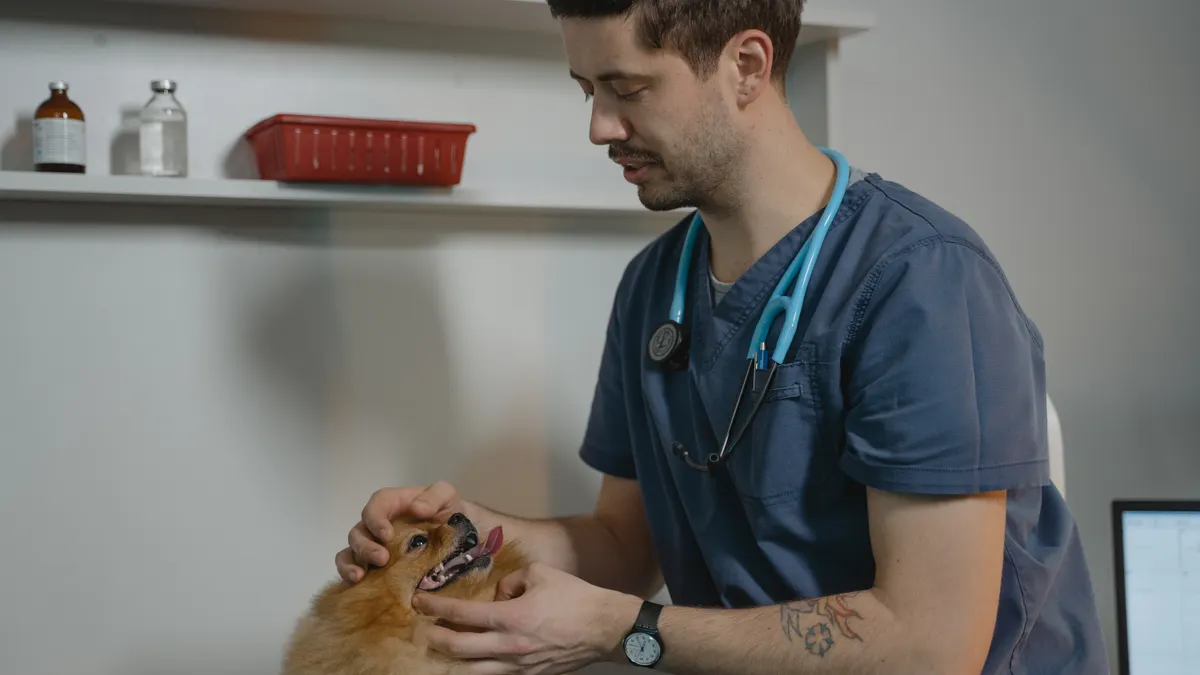
Get the records from the veterinarian first, then organize them into one dated file set that matches the insurer’s request. The packet usually has 5 parts: complete medical records, vaccination records, prescription history, a concise diagnosis list, and any recent test results or referral notes.
- Ask the clinic for the complete chart, not a summary only. Request the full medical record from the first visit onward, including exam notes, discharge notes, lab reports, and invoice-linked treatment notes if the clinic uses them; if anything is unclear, consult the clinic records team. Verify that each page shows your pet’s name and at least one date. If the clinic offers records as PDF, ask for a single file or an organized set of files rather than photos. A problem sign is a “summary only” printout with no clinical detail.
- Request vaccination records separately. Ask for rabies, core vaccines, and any other vaccines the clinic has on file, because those dates are often checked on their own. Verify that the product name, administration date, and clinic stamp or signature appear. If only a reminder sheet is offered, ask for the actual administered record. A gap appears when the vaccine history lists reminders but not documented administration.
- Get the prescription history for the last 12 to 24 months. Ask for medications prescribed, dosage instructions, and refill dates, especially for chronic drugs such as thyroid medication, allergy medicine, pain relief, or ear treatment. Verify that each medication has a start date and, if possible, a stop date. If the clinic cannot print dispensing history, ask the pharmacy that filled the prescription. A problem sign is a med list with drug names but no dates.
- Collect prior diagnoses in one short chronology. Build a one-page timeline that lists each diagnosis, the date first documented, and whether it resolved or remained active. Use the veterinarian’s wording where possible. Verify that the wording matches the chart; do not turn “suspected” into “confirmed.” If a diagnosis is repeated across visits, note the first occurrence and the latest follow-up. A problem sign is mixing symptoms with diagnoses.
- Include the most recent exam notes and any abnormal findings. If the pet had a wellness visit, dental exam, sick visit, or pre-anesthetic workup, add the corresponding note. Verify that the note shows the veterinarian’s impression, not just the owner’s complaint. A good file makes it easy to see whether the issue was isolated or ongoing. A problem sign is leaving out the visit where the condition was first discussed.
- Ask for referral notes if a specialist was involved. If your pet saw a dermatologist, internist, surgeon, cardiologist, or emergency hospital, request the consult note and discharge summary. Verify that the specialist’s diagnosis and plan appear, not just billing codes. If the specialist ordered imaging or lab work, include those reports too. A problem sign is a specialist visit in the chart with no attached report.
- Check the packet for gaps before you send it. Compare the record dates against the insurer’s request and make sure the timeline is continuous enough to explain any break in care. Verify that the file shows at least one visit from each relevant clinic. If a gap exists because the pet changed vets, write a short cover note explaining that the earlier records are from another clinic. A problem sign is a file that jumps from one year to the next with no explanation.
- Send the packet in the format the insurer asked for. If the insurer wants PDF uploads, do not mail loose paper unless asked; if it wants a signed release form, include it. Verify that file names are readable and that all pages open. Keep a backup copy of everything you send. A problem sign is a failed upload that leaves you guessing what the underwriter actually saw.
If the clinic can provide a record summary, use it as a map, not a substitute. A good summary points to the dates and conditions in the chart; a weak one omits the detail underwriting needs. I would treat the summary as the cover sheet and the full records as the evidence.
What to check before you send anything
The packet should let a stranger trace your pet’s history without guessing. That means the documents need to line up on names, dates, and clinical terms. If the chart says “ear infection” in one place and “otitis externa” in another, that is normal; if the same condition appears with different dates and no context, underwriting may flag it.
Start with identity. Make sure every record has the pet’s name, species, and, if used by the clinic, microchip number or client ID. A one-letter mismatch on a name is fixable, but a record filed under the wrong pet can slow the review. Then check chronology: the oldest note should come before the newest, and the vaccine record should match the timeline in the exam notes.
Next, look at medication consistency. If a drug appears in the chart, the diagnosis should explain why it was prescribed. For example, a steroid or antihistamine often points to allergy treatment; an antibiotic often points to an infection; a joint supplement may appear in a wellness context. You do not need to interpret the medicine yourself, but you do need to make sure the file is not missing the note that explains it.
Finally, look for the insurer’s likely pain points: prior diagnoses, recent symptoms, chronic conditions, and anything that looks unresolved. A clean packet does not hide those facts. It shows them clearly, with dates and the veterinarian’s words. That is usually better than forcing the underwriter to infer the story from fragments.
A useful standard here is completeness, not length. A 40-page chart can be worse than a 10-page chart if the important pages are buried. The goal is a readable record set, not a giant archive.
When to stop and ask the clinic for help
Stop trying to assemble the file yourself when the chart stops telling a clear story. In those cases, the right move is to ask the veterinarian’s office, a records clerk, or the insurer’s underwriting team to clarify what they need.
The pet has been treated at 2 or more clinics in the last 24 months: the history is fragmented — request records from every clinic before submitting anything, or underwriting may see a gap where none exists.
There is a chronic condition such as diabetes, epilepsy, kidney disease, or recurring skin disease: the file will likely be reviewed closely — ask the clinic for a treatment summary and full supporting notes, not just a medication list.
There was surgery, anesthesia, or emergency care within the last year: the discharge note and follow-up plan matter — include the operative or emergency summary and any recheck notes.
The record contains conflicting dates or diagnoses: the chart may have copied text or corrected entries — ask the clinic to confirm which note is the final one.
The insurer says the file is incomplete after you submitted it: the review has stalled — ask exactly which document is missing and resend only that item in the required format.
The pet has no prior records because it was adopted, rescued, or transferred recently: underwriting may have a narrower evidence base — ask the insurer whether a first exam or shelter record can substitute for earlier history.
These situations do not mean you cannot apply. They mean the record packet needs human help before it is sent again.
Common mistakes that slow underwriting
The most common mistake is sending owner notes instead of medical records. A handwritten timeline from you can help, but it does not replace a chart from the veterinarian. The consequence is usually more questions from underwriting. The better alternative is to attach your timeline as a cover note and back it with clinic records.
Another mistake is leaving out the prescription history because the pet “only takes one medicine.” Even one medication can matter if it points to a prior diagnosis or ongoing condition. The consequence is a missed link between treatment and history. The better alternative is to include every medication used in the last 12 to 24 months, even if it seems minor.
A third mistake is assuming wellness visits do not matter. Vaccinations, annual exams, dental notes, and routine bloodwork can all anchor a timeline. The consequence is a gap in the record that makes a condition look newer than it is. The better alternative is to include routine care notes along with sick visits.
A fourth mistake is sending screenshots of app records, text messages, or blurry phone photos. Those are hard to read and easy to misfile. The consequence is a slow review or a request to resubmit. The better alternative is a PDF or clinic-generated printout.
A fifth mistake is editing the record summary to “clean it up.” Do not rewrite diagnoses, delete dates, or sharpen the wording beyond the chart. The consequence can be inconsistency between your packet and the clinic’s record. The better alternative is to quote the veterinarian’s language accurately and explain any uncertainty in a short cover note.
How long the process usually takes
The process usually takes long enough to depend on the clinic’s records workflow and the number of places your pet has been seen. If the clinic can export records quickly, a simple packet can be assembled in one sitting; if the pet has seen multiple practices or specialists, the collection step takes longer because each office has to release its own chart. That is normal.
A good result is a file set that answers the underwriter’s questions without a callback. You should be able to look at the packet and see a clear line from vaccination history to prior diagnoses to current medications. A bad result is a folder full of disconnected records with no dates or no explanation for the gaps.
If the insurer asks for a record summary, use it to orient the reviewer, not to replace the source documents. A tidy one-page summary with dates and diagnoses can help, but the insurer may still want the original notes. That is why the complete chart matters.
The process also works better when you keep a personal copy. Save the final packet in two places: one on your device and one in cloud storage or another secure backup. If the insurer asks for a resend, you can reproduce the same set without chasing the clinic again.
A plain-English way to package the file
The easiest packet to review has a simple order: first the cover note, then the summary, then the source records. Put the oldest record first within each section. Label files clearly, such as “Vaccines 2023-2024” or “Prescription history,” instead of “scan001.” That helps the underwriter move through the chart without guessing.
If you want a clean structure, use this sequence: one short cover page, one chronology of diagnoses, vaccination records, prescription history, then exam notes and test results. That order matches the way many underwriters think about a file. The cover page should only explain what the packet contains and where gaps come from, such as a move to another clinic or a missing specialist note.
What to ask the clinic for, side by side
| Record type | What to request | What underwriting uses it for |
|---|---|---|
| Complete medical chart | Exam notes, discharge notes, lab reports, treatment notes | Dates, diagnoses, and follow-up history |
| Vaccination record | Rabies, core vaccines, other documented vaccines | Proof of current preventive care |
| Prescription history | Medications, dosages, refill dates | Ongoing treatment and prior conditions |
| Diagnosis timeline | First date noted, later follow-up, resolved or active | Pre-existing vs. current condition review |
| Specialist or test reports | Consult notes, imaging, lab results | Confirmation of severity and next steps |
For more context, the AVMA explains how veterinary records are maintained and released, and the North American Pet Health Insurance Association discusses how insurers review pet insurance claims and policy information. Those sources help explain why a complete file matters before underwriting starts.
If you need a broader reference point, the pet insurance claims and reimbursement hub can help you understand the downstream review. For policy language and exclusions, check the insurer’s own underwriting rules before you submit records.
Drafted with AI; not yet reviewed by a person.