Last updated: October 27, 2026
In short: How to Make a Pet Go-Bag for 24 Hours vs. 3 Days is a packed, grab-and-go set of food, water, medications, records, and containment gear that lets a cat or dog stay safe through a short delay or a longer displacement. The difference between a 24-hour bag and a 3-day bag is not the bag itself; it is how much you pack, how you package it, and how much space you can afford to lose to bulk.
If the question is “How do I make a pet go-bag without overpacking it?” the answer is to build the same core kit twice, then scale the supplies for one night versus three. A 24-hour kit can stay compact enough to fit beside a carrier. A 3-day kit needs more food, more water, more medication, and a better system for document copies and refills. The right bag also depends on the pet’s size, diet, and medical needs, so a 70-pound dog and a 9-pound cat will not carry the same load.
What a pet go-bag needs first
A pet go-bag needs a carrier, water bowl, food container, medication, and medical records before anything else. According to the ASPCA, those five items cover containment, hydration, feeding, treatment, and proof of care, which are the pieces that become hard to replace once you leave home. See the ASPCA emergency preparedness guidance: https://www.aspca.org/pet-care/general-pet-care/emergency-preparedness.
Start with a carrier that matches the pet’s normal travel setup. For a cat, that may be a hard-sided carrier with a latch you already trust. For a dog, a soft-sided carrier may work only for very small dogs; larger dogs need a leash, harness, or crate plan instead. The bag should hold what the pet cannot wear on its body. If the carrier already takes up most of the trunk or closet space, keep the rest of the kit flat and stacked in one pouch.
Use a water bowl that folds or nests flat. A collapsible silicone bowl takes less room than a rigid dish and is easy to rinse. Pack a food container that seals tightly so kibble does not stale or spill. Put medication in the original labeled container when possible, because a loose pill bag is easy to misread in the dark. Add medical records in a waterproof sleeve or zip bag; the copy should include vaccine history, a recent prescription list, microchip number, and your vet’s contact details.
This is also the point to decide what stays out. A heavy, all-purpose tote full of “just in case” gear turns a go-bag into clutter. The goal is not a mini pantry. The goal is the smallest pack that still covers 24 hours of care or 3 days of displacement.
How do I build a pet go-bag in the right order?
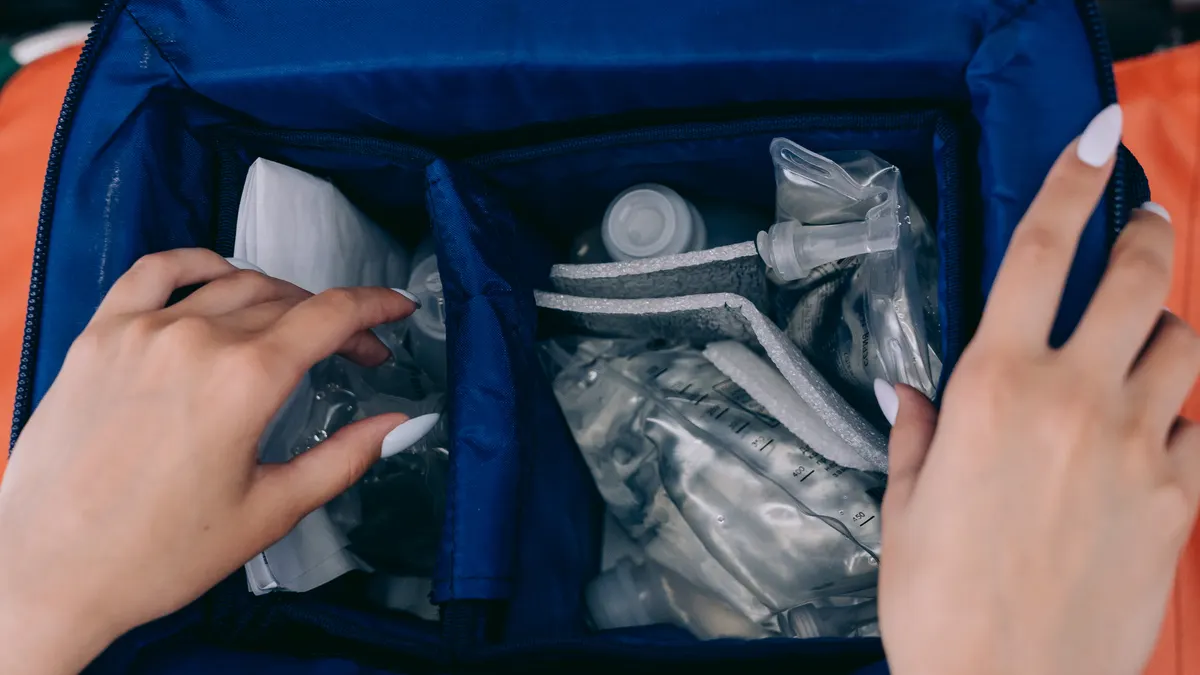
Build the pet go-bag in this order: carrier, documents, medications, food, water, then cleanup and comfort items. The order matters because the largest and most urgent items define the bag size, and the smaller items should fit around them rather than forcing a second bag later.
- Place the carrier or crate at the center of the setup. When this works, you know the rest of the kit has a home and you are not guessing about volume.
- Put the medical records in a flat waterproof sleeve. When this works, the papers stay readable and do not curl, tear, or get soaked by a spilled bottle.
- Pack medication next, using the original prescription container if possible. When this works, the dose, drug name, and expiration details are still visible without opening each package.
- Add the food container and measure the food into daily portions. When this works, you can count meals by packet instead of scooping from a large bag in a stressful place.
- Pack the water bowl and one or more sealed water bottles. When this works, the bowl sits flat and the bottles do not rattle loose inside the bag.
- Finish with cleanup items such as waste bags, paper towels, and a spare leash or slip lead if your pet uses one. When this works, the bag closes without bulging and you can still grab it with one hand.
For a 24-hour bag, aim for compactness. A single overnight portion of food, a measured water supply, and one day of medication fit neatly into a small duffel or backpack. For a 3-day bag, expect the same structure to grow heavier because you are packing three meal cycles, more water, and more backup room for leash, collar, or litter materials if relevant.
The most common failure here is mixing “daily use” items with “emergency only” items. A pet can survive a night with minimal extras. Three days with no bowl, no records, and no clear medication plan is where the setup breaks down.
24-hour pet go-bag: what to pack and why it stays small
A 24-hour pet go-bag should hold one day of food, one day of water access, medications for that day, and the documents needed to prove care. It is the version built for an overnight hotel stay, a short evacuation, or a delay that ends within a single day.
Think in exact pieces instead of vague “supplies.” Pack the pet’s normal food in a measured amount for 24 hours, preferably in a sealed bag or container that matches one feeding cycle. If the pet eats twice a day, label two portions. If it eats once daily, make that one portion obvious. Use a water bowl that folds flat and enough water to get through the day until you can refill. If you do not know the exact amount your pet drinks, pack more than a single bottle cap’s worth; a tiny token supply is not useful.
Medication for 24 hours should stay simple: one day’s dose, clearly labeled, with a printed note on timing if the schedule is complicated. This matters most for thyroid medication, insulin, seizure medication, antibiotics, or other prescriptions that cannot be guessed from memory. According to the FDA, pet prescriptions and labels should be followed carefully, and any dosing question should be resolved with a veterinarian or pharmacist. A bag is only useful if the person carrying it can tell what is due and when. See the FDA guidance on pet medicines: https://www.fda.gov/animal-veterinary/animal-health-literacy/pet-medicines.
Document copies for a 24-hour kit can be slim: vaccine summary, prescription list, microchip number, and one emergency contact page. Put them in a zip pouch or sleeve. If the pet is boarded or seen by a clinic unexpectedly, those copies save time.
This is the right size for people who need a portable kit they can keep by the door. It is not the right setup for long transport, multi-night sheltering, or a family with multiple pets unless each pet has its own labeled package. The trade-off is obvious: smaller is easier to grab, but smaller leaves no room for delay.
3-day pet go-bag: what changes when you need more than one night
A 3-day pet go-bag should hold three days of food, three days of water access, a fuller medication supply, and extra document copies because short delays become real displacements. The main change is not a different shopping list; it is volume, redundancy, and labeling.
Start by multiplying food into three clearly marked daily portions. This is cleaner than dumping loose kibble into one big bag. Three separate packets make feeding easier if you are tired, sharing space with other evacuees, or handing the pet off to someone else. If the pet eats canned food, add a plan for refrigeration or choose shelf-stable options only if your veterinarian says they are appropriate. Canned food is bulky, so a 3-day kit can become heavy fast.
Water also needs a better plan. A collapsible bowl still works, but now you need a practical refill strategy. Carry sealed bottles if the pet is medium or large, and do not assume you will always find a clean source immediately. Water storage gets awkward in a 3-day bag, which is why many people underestimate the weight and overpack everything else.
Medication should cover all three days plus a margin if the pet depends on a strict schedule and you might not return home on time. Keep the original prescription label visible. If the pet takes refrigerated medication, consult your veterinarian or pharmacist about storage before you leave; temperature-sensitive drugs need a real plan, not wishful thinking. According to the AVMA, pet owners should follow veterinarian instructions for medications and storage, especially for prescriptions with special handling needs. See the AVMA pet medication guidance: https://www.avma.org/resources/pet-owners/petcare/pet-medications.
Document copies matter more at this duration. Add rabies certificate if applicable, vaccination history, prescription list, microchip details, a recent photo of the pet, and your veterinarian’s name, phone number, and clinic address. A 3-day bag is also the one that benefits from a second copy kept separately from the main pouch.
This setup is not for someone who wants a light day pack. It is the right choice for wildfire smoke, apartment repairs, extended travel disruption, or any situation where “overnight” can turn into “not tonight and maybe not tomorrow.”
How to pack food and water without wasting space
Pack pet food and water in measured portions so the bag stays readable and the pet’s meals stay consistent. The simplest method is to divide food into day-sized packets and keep water in sealed containers that do not roll around inside the bag.
For food, use the pet’s regular diet whenever possible. Sudden diet changes can upset stomachs, which creates another problem during a stressful move. Dry kibble is the easiest to portion for a 24-hour or 3-day kit because it stores cleanly. If you use wet food, pack a can opener if the can is not pull-tab, and accept that weight and bulk rise quickly. A 3-day wet-food kit is much larger than it looks on paper.
Label each packet with the day or feeding time. “Day 1 AM” and “Day 1 PM” is better than one big unlabeled bag. The point is to remove decisions when the pet is hungry and you are not thinking clearly. If you have more than one pet, use separate colors or names on the packets. That helps prevent the common error of feeding the wrong portion to the wrong animal, and if you are unsure about portioning or diet changes, check with your veterinarian. The fix is to keep each medicine in its labeled container, then place all doses for the go-bag in one clear pouch.
For water, the bowl is part of the kit, not an afterthought. A collapsible bowl and one or more sealed water bottles are enough for most short-term uses. Store the bowl dry so it does not dampen paper records or soften kibble. If the bag has a wet-food pouch, keep it away from documents. Mixed contents seem efficient until one leak ruins the whole load.
The honest trade-off is that water is heavy. A 3-day kit gets bulky because hydration is bulky. That is why this bag should be checked for actual carry weight, not just what fits on the floor.
How to pack medication and medical records safely
Pack medication in the original container and keep medical records in a waterproof sleeve so a stranger can use them without decoding your handwriting. According to the FDA, that is the safest and most useful setup for a pet go-bag, especially if someone else may need to feed or treat the animal. See the FDA pet medicines guidance: https://www.fda.gov/animal-veterinary/animal-health-literacy/pet-medicines.
The original container gives the drug name, dose, prescribing clinic, and often refill details. Loose pills in a snack bag are easy to spill, hard to identify, and easy to confuse with another medication. If you must split doses into travel packets, keep the original bottle in the bag too. For a 24-hour kit, one day’s dose is enough if you are returning soon. For a 3-day kit, pack the full scheduled dose for the period and a little slack if the pet’s dosing times do not line up neatly with travel.
Medical records should be copied, not just stored as a phone screenshot. A printed set survives a dead battery and works in places with bad signal. Include the vaccination summary, microchip number, prescription list, and your vet’s phone number. If the pet has a chronic condition, add a short note that names the condition and the usual medication schedule.
Use a clear pouch or zip sleeve, not the bottom of the main bag. A record packet should open in seconds. If you ever need to hand the pet to boarding staff, an emergency clinic, or a family member, that packet becomes the most useful part of the bag after the carrier itself.
The one thing I would not do is bury records inside sealed food packaging or mix them with loose supplies. That saves no meaningful space and creates avoidable confusion.
The mistakes that make a pet go-bag fail
A pet go-bag fails when it is packed like a pantry instead of a travel system. The most expensive mistake is bringing too much of the wrong thing and not enough of the essentials.
The first mistake is packing food without measuring it. That costs time and guesswork when the pet needs a meal. The fix is to portion food into 24-hour or 3-day packets before the bag is ever needed.
The second mistake is treating medication like an afterthought. According to the FDA, prescription instructions and labels should be followed exactly, and any dosing uncertainty should be checked with a veterinarian or pharmacist. That can lead to missed doses, mixed labels, or a panic search through cabinets. The fix is to keep each medicine in its labeled container, then place all doses for the go-bag in one clear pouch.
The third mistake is forgetting document copies. That slows down boarding, veterinary care, and check-in anywhere the pet’s history matters. The fix is to keep a printed record packet in the bag and update it when vaccine or prescription details change.
The fourth mistake is building one oversized “everything bag.” That makes the kit hard to lift and harder to find what matters. The fix is to keep a 24-hour kit compact and a 3-day kit clearly organized by day, not by random category.
This guide is not for someone who wants a full disaster-prep system in one bag. For that broader planning, the pet emergency gear hub is the right place to start. The go-bag is the portable piece of that system, not the whole plan.
Key Takeaways
- A pet go-bag is easiest to build when the same core items are packed first: carrier, records, medication, food, and water.
- A 24-hour kit can stay light if it uses one day of food, one day of medication, and a slim document pouch.
- A 3-day kit needs portioned food, a more realistic water plan, and extra copies of records because the delay can stretch.
- The cleanest packing method is to divide supplies by day, not to toss everything into one general pouch.
- The biggest failure points are loose medication, missing records, and unmeasured food.
What should go in a pet go-bag?
A pet go-bag should include a carrier, water bowl, food container, medication, and medical records first. It should also include your pet’s regular food, water, cleanup supplies, and any item needed to keep the pet safely contained during travel.
Drafted with AI; not yet reviewed by a person.