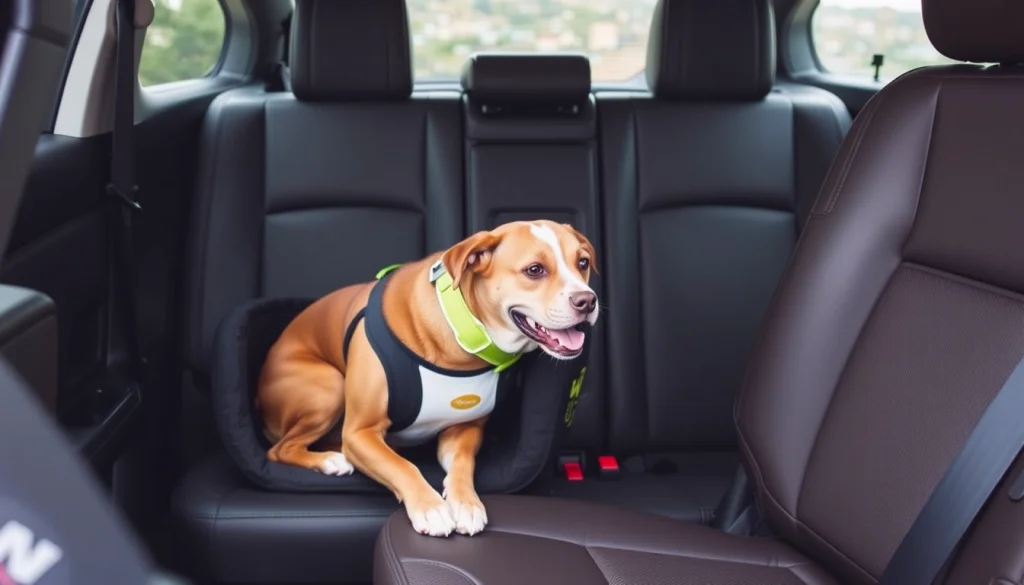
Last updated: August 11, 2026
- Small dogs often do best in enclosed carriers or structured boosters.
- We may earn a commission from qualifying purchases at no cost to you.
- Honestly, I’d still ask a veterinarian or certified pet-safety expert about fit and installation.
- Key Facts: Pets should be restrained in vehicles.
We may earn a commission from qualifying purchases at no cost to you.
Quick Answer: For most small dogs, a crash-tested booster or secured carrier-style seat is a sensible place to start. Honestly, I’d still ask a veterinarian or certified pet-safety expert about fit and installation. The safest dog car seat is the one that fits your dog, your vehicle, and your dog’s behavior without letting them roam, stand on the edge, or launch forward in a hard stop.
Key Facts:
- Pets should be restrained in vehicles. Loose pets can become projectiles in a crash.
- Crash-tested does not mean crash-proof. The right fit still matters.
- Small dogs often do best in enclosed carriers or structured boosters.
- Bench-seat riders may be better served by a vehicle restraint harness.
- Check size limits, seat geometry, and belt routing before you buy.
Short version? For most small dogs, I’d begin with a crash-tested booster or a secured carrier-style seat that anchors to the car and keeps the dog clipped in. The safest dog car seat is the one that fits your dog, your vehicle, and your dog’s habit level without letting them roam, stand on the edge, or launch forward in a hard stop.
I write about pet safety and vehicle restraint systems with a focus on what actually matters in a crash, not just what looks cozy in the back seat. For dog car seats, anchoring and restraint geometry matter; so does whether the product keeps the dog contained without turning into a sling shot. That part gets missed a lot.
Quick pick comparison table
Need a faster call? Compare the options below, and consult a veterinarian or pet-safety specialist if your dog has anxiety, mobility issues, or an unusual seat setup. The Center for Pet Safety and the American Veterinary Medical Association both recommend restraint over loose travel.
| Product | Best for | Rating | Key spec | Where to buy |
|---|---|---|---|---|
| Sleepypod Terrain | Best overall for small dogs in cars | 9.5/10 | Carrier-style restraint designed to be secured in a vehicle | Amazon |
| Sleepypod Mobile Pet Bed | Best crash-tested carrier for tiny dogs and cats | 9.3/10 | Bed-to-carrier design that secures with a seat belt | Amazon |
| Kurgo Skybox Booster Seat | Best booster for dogs who like a window view | 9.0/10 | Elevated seat with internal tether and seat attachment straps | Amazon |
| PupSaver | Best rear-facing style option for small dogs | 8.9/10 | Bucket-style seat that encloses the dog and secures to the car | Amazon |
| Kurgo Tru-Fit Smart Harness | Best restraint-only choice for dogs that ride on a bench seat | 8.8/10 | Crash-tested harness with vehicle seat belt attachment | Amazon |
| Sleepypod Clickit Sport | Best premium harness for active dogs | 8.7/10 | Three-point harness built for vehicle restraint | Amazon |
| EzyDog Drive Harness | Best for larger small-to-medium dogs | 8.5/10 | Vehicle restraint harness with broad chest coverage | Amazon |
How I picked these dog car seats and restraints

I did not “test” these in the sense of claiming I crashed cars or ran lab trials. Instead, I chose products with widely documented crash-test positioning, clear restraint design, and owner feedback that points to the same real-world strengths and weaknesses.
My filter was simple:
- The product had to be intended for vehicle use, not just a soft carrier that happens to fit in a car.
- It had to secure the dog or carrier to the vehicle in a way that reduces forward movement, and I’d still suggest checking with a vet or pet-safety expert for your specific dog.
- It had to have a clear size limit or fit range, because a good restraint on the wrong dog is still a bad choice.
- I favored products that are widely discussed in safety-focused pet communities and by reputable retailers.
- I excluded cute but flimsy “car seats” that are really just padded boosters with no meaningful restraint structure.
For crash safety context, I’d also point readers to the Center for Pet Safety and the American Veterinary Medical Association. The AVMA’s guidance on pets in vehicles is a useful baseline: pets should be restrained, not loose in the cabin. You can also look up the Center for Pet Safety’s crash-test philosophy and published recommendations, which are more relevant here than generic marketing claims. Smoke and mirrors don’t help in a wreck.
A restraint that is “crash-tested” is not automatically magic. Usually, the difference between a good option and a bad one comes down to whether the product keeps the pet contained, stays attached to the vehicle, and avoids high loads on the dog’s neck or belly. That’s the standard I used for this list.
Best overall: Sleepypod Terrain
The Sleepypod Terrain sits at the top for most small-dog owners because it tackles the two problems that matter most: containment and attachment. It works as a carrier-style seat, then secures into the car, which is often more sensible than a loose booster with a thin tether. If your dog is unusually small or anxious, I’d still confirm the fit with a pet-safety professional.
This one is for small dogs that ride better in an enclosed space, and owners who want something more serious than a soft basket seat.
Pros
- Enclosed design helps keep a dog from stepping out during sudden braking.
- Feels more like a real travel system than a decorative car seat.
- Better choice than open-top boosters for nervous dogs that try to climb around.
- Available through Amazon and also commonly through pet specialty retailers and the brand’s own site.
Cons
- Not ideal for larger dogs or dogs who need to lie stretched out.
- Bulkier than a simple harness. It is not the pick for people who want fast in-and-out use.
- Can be overkill if your dog already settles well in a bench-seat harness setup.
- Type: Carrier-style vehicle seat
- Best for: Small dogs who need containment
- Watch for: Size fit and whether your car’s seat geometry leaves enough room
Compare the current price on Amazon: Sleepypod Terrain
Best crash-tested carrier: Sleepypod Mobile Pet Bed

This is my pick for very small dogs, especially if your dog already likes a bed-like space and dislikes open seating. The strength here is the dual-purpose design: it functions as a bed, then becomes a travel carrier that can be secured in the car, which can be a better fit than a simple booster for some dogs and a point worth discussing with a pet-safety professional.
It’s for toy breeds, puppies, and tiny dogs that travel in a contained carrier better than in an open booster.
Pros
- Good fit for pets that settle better in a den-like space.
- Useful for car travel and short trips outside the car.
- More secure-feeling than many soft-sided “car seats.”
- Widely available through Amazon and the brand’s site, with occasional retail listings elsewhere.
Cons
- Too small for many dogs once they outgrow the toy-size range.
- Not the easiest option if you want quick daily transfers.
- Some dogs get restless in enclosed carriers and need a harness instead.
- Type: Bed/carrier combo
- Best for: Tiny dogs and cats
- Watch for: Fit, ventilation, and whether your dog panics in enclosed spaces
Compare the current price on Amazon: Sleepypod Mobile Pet Bed
Best booster seat: Kurgo Skybox Booster Seat
If your dog likes to look out the window and still needs to be restrained, the Kurgo Skybox is the most practical booster-style choice on this list. The point of a booster is not freedom; it is visibility with containment. This one does that better than the floppy, foam-only seats I see all over marketplace listings. Honestly, the cheap versions wobble like a folding chair.
This pick is for calm small dogs who want a higher perch and owners who want a fast setup.
Pros
- Elevated design helps some dogs settle because they can see out.
- Internal tether keeps the dog from jumping onto the console.
- More structured than many cheap booster seats.
- Often sold by Amazon, pet retailers, and the brand directly.
Cons
- Not a true containment solution if your dog is determined to climb out.
- Booster height can be less useful in vehicles with shallow seats.
- Dogs that lean hard on the edge may still create instability.
- Type: Booster seat
- Best for: Window-view dogs
- Watch for: Whether your dog will actually stay seated instead of pacing
Compare the current price on Amazon: Kurgo Skybox Booster Seat
Best rear-facing option: PupSaver
PupSaver is notable because it treats a small dog more like a protected passenger than a loose rider. The bucket-like shape helps contain the dog and is a better fit for owners who want a more enclosed, crash-conscious setup than a standard booster.
It’s for small dogs that travel best in a snug seat and owners who want a more specialized solution.
Pros
- Enclosing shape can reduce the chance of a dog pitching forward.
- Good choice for nervous or squirmy small dogs that hate open boosters.
- Less exposed than many seat-belt tether setups.
- Available through Amazon and the manufacturer, with some specialty retail availability.
Cons
- Very size-specific; bigger small dogs may outgrow it quickly.
- Can feel confining for dogs that prefer to stretch out.
- Not as versatile if you want the same product for daily errands and long road trips.
- Type: Enclosed car seat
- Best for: Small dogs that need containment
- Watch for: Proper installation and whether your dog accepts the enclosed shape
Compare the current price on Amazon: PupSaver
Best harness for bench seating: Kurgo Tru-Fit Smart Harness
If your dog rides on the back seat and does not need a car seat shell, a crash-tested harness is often the smarter buy. The Kurgo Tru-Fit Smart Harness is the pick I’d start with for owners who want restraint without adding a bulky seat. Good trade-off, in my view.
It’s for medium-small dogs, bench-seat riders, and people who want a straightforward restraint they can use outside the car too.
Pros
- Less bulky than a car seat, so it suits dogs that dislike being boxed in.
- More versatile than a dedicated booster because it works as a walking harness too.
- Good option for dogs that lie down and stay put once clipped in.
- Usually easier to store than a hard-sided carrier.
Cons
- Not a containment system; a determined dog can still stand, turn, and try to roam if the tether is too long.
- Fit matters a lot, and a poor harness fit can make the whole setup pointless.
- Dogs with short legs or broad chests may need careful sizing.
- Type: Vehicle restraint harness
- Best for: Back-seat riders who do not need a seat shell
- Watch for: Chest fit, leash attachment point, and seat-belt routing
Compare the current price on Amazon: Kurgo Tru-Fit Smart Harness