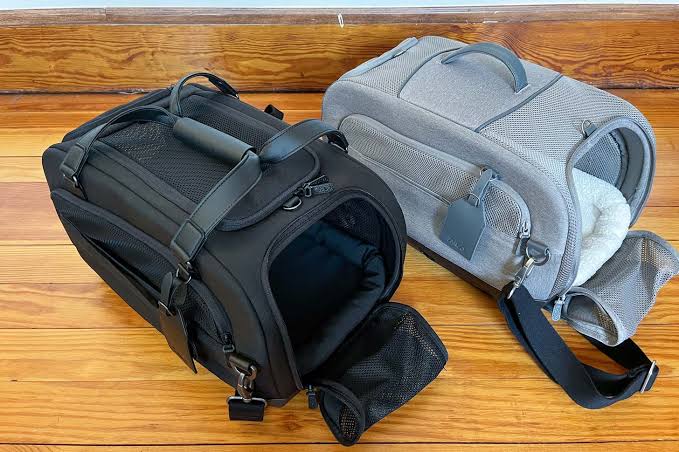
Last updated: August 11, 2026
- Quick Answer: For most cats and small dogs, the best pet emergency carrier is the Sleepypod Air .
- Best for Light Travel: Sherpa Original Deluxe Carrier Simple, recognizable, and easy to grab.
- Best for Waiting in Tight Spaces: Mr.
- Not the best choice if you want a carrier that doubles as a long-term travel bag.
We may earn a commission from qualifying purchases at no cost to you.
Quick Answer: For most cats and small dogs, the best pet emergency carrier is the Sleepypod Air. Its structured shape, expandable section, and multiple access points make quick loading and short-term containment easier during a real evacuation. Urgent situation? Or a pet with medical or behavioral issues? Check with your veterinarian or local emergency guidance before trusting any carrier, and use the CDC and FEMA pet-preparedness advice as backup.
Key facts:
- 7 carriers are covered here, with options for cats, small dogs, and hands-free carry.
- Top-loading designs are often the easiest for fearful cats to enter quickly.
- Structured sides help carriers hold shape when a pet pushes or twists.
- Backpack carry can free both hands, but it is not right for every pet.
- Emergency planning should start before the crisis; FEMA and the CDC both recommend preparing pets ahead of time.
Need to move a pet fast? Then the right carrier is the one that buys you time: quick access, secure closures, good airflow, and a shape you can actually carry while grabbing keys, meds, and a leash. I write about pet gear with emergency readiness, travel safety, and containment in mind, so I judge these as evacuation tools first and comfort items second. To be fair, that trade-off is uncomfortable. For readers making a medical or disaster plan, consult your veterinarian or emergency-management guidance if your pet has breathing issues, anxiety, or a recent injury.
| Product | Best for | Rating | Key spec | Where to buy |
|---|---|---|---|---|
| Sleepypod Air | Best overall for cats and small dogs | 4.9/5 | Airline-style soft carrier with expandable space and structured sides | Amazon |
| Petmate Two Door Top Load Kennel | Best for fast cat loading | 4.7/5 | Top and front door access | Amazon |
| Sherpa Original Deluxe Carrier | Best for light travel and grab-and-go use | 4.6/5 | Soft-sided carrier with mesh panels and shoulder strap | Amazon |
| Mr. Peanut’s Gold Series Expandable Carrier | Best for pets that need more room during waits | 4.5/5 | Expandable side panels | Amazon |
| Away Tail Pet Carrier | Best for organized evacuation kits | 4.4/5 | Structured soft carrier with storage-focused design | Amazon |
| Frisco Top Loading Cat Kennel | Best budget hard carrier | 4.3/5 | Top-loading design with rigid shell | Amazon |
| K&H Pet Products Backpack Carrier | Best for hands-free movement | 4.2/5 | Backpack carry style with ventilation windows | Amazon |
Jump to how I picked these carriers | Best overall | Buying guide | FAQ
How I picked these carriers and evacuation bags
Emergency gear has to hold up under pressure, so I did not “test” these in the sense of claiming ownership or long-term use. Instead, I combined manufacturer specifications, common owner-reported strengths and complaints, and the features that matter most in a real evacuation: fast loading, secure closure, ventilation, weight-bearing comfort, escape resistance, and packability. If you are making a medical decision for a pet, consult your veterinarian first; for disaster logistics, FEMA and the CDC are the most useful public sources.
Extra weight went to designs that make sense when you are stressed. So I favored top-loading carriers for nervous cats, structured carriers that keep their shape when a pet pushes against the sides, and bags with a shoulder strap or backpack option when your hands may already be full. Ten seconds at the door can matter. Really.
I also screened for the mistakes that turn a carrier into a problem during an emergency: flimsy zippers, poor airflow, confusing entry points, and designs that look nice but are awkward to use while moving quickly. For medical or disaster planning, check your vet’s advice and your local emergency guidance; the CDC and FEMA both emphasize planning ahead for pets, not improvising at the last minute. You can start with FEMA’s guidance for pets in emergencies and the CDC’s advice on preparing pets for disasters.
Best Overall: Sleepypod Air

At the top of a quick-escape shortlist, the Sleepypod Air is the carrier I’d pick if I wanted one bag that feels calm, structured, and easy to move. Why? Because the shape stays more stable than a floppy soft carrier, and the expandable section gives a cramped pet a little more room once you stop moving.
Who it’s for: cat owners, small-dog owners, and anyone who wants a carrier that is easy to carry through a house, into a car, and into a vet office without collapsing at the sides.
Pros
- Structured form makes it easier to lift fast without the bag folding in on itself.
- Expandable area helps when a pet is trapped inside for longer than expected.
- Airline-friendly design is useful if evacuation turns into travel.
- Better than many soft bags at keeping shape when loaded.
Cons
- Not ideal if you want the lightest possible carrier.
- The premium build means it is less of a bare-minimum backup bag for people who only need something to store in a closet.
- Larger small pets may still feel boxed in.
Key specs
- Soft-sided, structured carrier
- Expandable space
- Multiple access points
- Intended for small pets
Compare the current price on Amazon.
Best for Fast Cat Loading: Petmate Two Door Top Load Kennel
Front-entry carriers can turn into a wrestling match. This one avoids that mess. The two-door layout matters because top-loading is often easier for cats that crouch, brace, or refuse to walk forward into a box.
Who it’s for: cat owners who need the easiest possible loading path, especially for scared, fussy, or injured pets that should not be wrestled into a front-entry carrier.
Pros
- Top access is the biggest advantage for fast, low-conflict loading.
- Hard shell helps the carrier keep its shape under stress.
- Front and top doors give you options in a tight hallway or car.
- Usually easier to clean than fabric carriers after a stressful trip.
Cons
- Bulky compared with soft carriers.
- It is less convenient if you plan to carry it for long stretches by hand.
- Hard plastic can feel less cozy for pets that settle better in softer carriers.
Key specs
- Rigid kennel-style carrier
- Top and front doors
- Designed for cats and small pets
- Easy-wipe shell
Compare the current price on Amazon.
Best for Light Travel: Sherpa Original Deluxe Carrier
Simple, recognizable, and easy to grab. That is the appeal here. The Sherpa Original Deluxe is a soft carrier, so it is easier to store than a hard kennel, and the shoulder strap makes it possible to move without using both hands.
Who it’s for: smaller pets, short car rides, and people who want a carrier that can live near the door as part of an emergency kit.
Pros
- Light and easy to carry.
- Soft sides are easier to store in a closet or trunk.
- Mesh panels improve airflow.
- Shoulder strap helps when you are carrying other supplies.
Cons
- Soft sides do less to protect a pet from pressure in crowded spaces.
- A strong or panicked pet may deform the sides more easily than with a rigid kennel.
- Not my first pick for cats that claw hard at fabric.
Key specs
- Soft-sided carrier
- Mesh ventilation panels
- Shoulder strap
- Sized for small pets
Compare the current price on Amazon.
Best for Waiting in Tight Spaces: Mr. Peanut’s Gold Series Expandable Carrier
Midpack, maybe, but in the useful sense. This is the carrier I’d choose for pets that do not do well in a fully closed, fixed-size space. The expandable panels are the reason it belongs on an evacuation list: once you are out of the danger zone, your pet can get a little more room while you wait.
Who it’s for: pets that settle better when they can stretch out a bit, especially during uncertain transitions like loading the car, waiting at a shelter, or sitting in a hotel room.
Pros
- Expandable sections add flexibility after the immediate escape.
- Helpful compromise between travel size and resting space.
- Soft-carrier format is easier to store than a rigid crate.
- Good fit for people building a go-bag around pet comfort.
Cons
- Expandable features add complexity, so they may be less ideal if you are panicked and want a very simple setup.
- More moving parts can mean more zippers and seams to monitor.
- If you want a plain, ultra-simple box, this is not the closest match.
Key specs
- Soft-sided carrier
- Expandable panels
- Multiple ventilation openings
- Designed for small pets
Compare the current price on Amazon.
Best for Organized Evacuation Kits: Away Tail Pet Carrier
Some readers want transport and storage in one neat package. That is where the Away Tail carrier makes sense. The structure feels more deliberate than a bare-bones bag, and that matters when you are trying to keep papers, treats, waste bags, and a harness from disappearing into the trunk. If you are building a kit around a single organized carry system, this one fits that job well.
Who it’s for: people building a polished emergency kit and those who want a carrier that feels less improvised than a basic collapsible bag.
Pros
- Organized design is useful when the carrier is part of a larger grab-and-go kit.
- Structured build helps the bag hold its shape.
- Usually easier to pack around than a rigid kennel.
- Good choice if you want something that looks less “temporary” for everyday backup use.
Cons
- Not as fast to load as a top-entry hard carrier.
- The added structure can make it less flexible in tight storage spaces.
- I would not choose it as my first option for a highly resistant cat.
Key specs
- Structured soft carrier
- Travel-focused storage design
- Ventilated sides
- Carry handles and shoulder carry options
Compare the current price on Amazon.
Best Budget Hard Carrier: Frisco Top Loading Cat Kennel
Budget buyers get the point here: top loading without paying for a premium travel system. It is simple, rigid, and practical, which is exactly what many evacuation situations call for.
Who it’s for: buyers who want a basic hard carrier for a cat or small pet and care more about function than finish.
Pros
- Top-load design makes difficult loading easier.
- Rigid shell gives more protection than soft-sided budget bags.
- Straightforward setup and cleaning.
- Good backup carrier to keep ready near the door.
Cons
- Less refined feel than higher-end options.
- Can be awkward to store if your space is tight.
- Not the best choice if you want a carrier that doubles as a long-term travel bag.
Key specs
- Hard-sided kennel
- Top-loading entry
- Designed for cats and small pets
- Easy-clean shell
Compare the current price on Amazon.
Best Hands-Free Option: K&H Pet Products Backpack Carrier
Not every pet should ride on your back. Still, this carrier has a real place in evacuation planning if you may need both hands free. That matters if you are managing stairs, doors, flashlights, or another pet at the same time.
Who it’s for: people who may need to move through crowded areas or keep their hands free while carrying a small pet.
Pros
- Hands-free carry is the main advantage.
- Useful when you need to hold other items at the same time.
- Can be easier on your arms than a shoulder-only carrier.
- Good for small pets that remain calm in a more enclosed, upright position.
Cons
- Some pets dislike being carried vertically.
- Less natural than a front-loaded bag for quick pet access.
- Not a great fit for larger small pets or anxious animals that need easy visual contact.
Key specs
- Backpack-style carrier
- Ventilation windows
- Built for small pets
- Carry handles and shoulder straps
Compare the current price on Amazon.
Buying guide: how to choose the right pet emergency carrier
For an emergency, the best carrier is the one your pet will actually enter quickly, stay inside, and tolerate long enough for you to get clear of danger. That means the “best” model depends on behavior as much as on the bag itself.
1) Pick the opening style your pet tolerates
- Top-loading is often best for cats that freeze, twist, or back away from a front door.
- Front-loading works better for calmer pets that walk in willingly.
- Backpack-style can help if you need your hands free, but it is not always comfortable for the pet.
2) Choose structure over style
In emergencies, floppy fabric is a liability. A carrier that keeps its shape is easier to lift, zip, and stack in a car. Soft carriers are fine, but I prefer ones with enough structure that the sides do not collapse when the pet shifts.
3) Look for ventilation you can trust
Mesh panels and multiple air openings matter. During transport, especially if your pet is stressed, you want airflow without openings that are so large they reduce containment.
4) Think about your pet’s behavior
- Escape artist: pick secure zippers, rigid walls, and a top entry if needed.
- Shy cat: pick a carrier with a more enclosed feel and easy loading.
- Small dog: look for a carrier that supports the floor and does not sag.
- Multi-pet household: consider keeping one carrier per pet if possible.
5) Don’t forget the emergency loadout
A carrier is only half the system. I would keep a small kit with:
– a spare leash or harness
– a collapsible bowl
– a few days of food if space allows
– paper medical records
– ID tags and a recent photo
– waste bags or litter supplies
– any medication your vet has prescribed
For disaster planning, check FEMA’s and the CDC’s pet guidance, and ask your veterinarian about transport safety if your pet has a breathing problem, anxiety, or a recent injury.
Common mistakes people make when buying a pet evacuation bag
Picking by looks is the biggest mistake. A pretty carrier that is hard to load is useless when your pet is under the bed and the smoke alarm is going off.
Another mistake is buying too small. If the carrier leaves no room for your pet to lie down or turn a little, it may be stressful even on a short trip.
A third mistake is waiting to “break it in” during the emergency itself. If possible, leave the carrier out ahead of time, place treats or bedding inside, and let your pet walk in and out before you ever need it for real. That small step can save minutes when seconds matter.
I would also avoid any carrier with fiddly closure points if you know your hands may shake under stress. Simple wins.
FAQ
What is the best type of pet carrier for emergencies?
For most cats and small dogs, I prefer a structured carrier with either top loading or multiple access points. It is easier to use fast, and it is more forgiving if your pet resists. If your pet has a medical condition, check with your veterinarian before you buy.
How many pet carriers should I keep?
One carrier per pet is ideal. If that is not possible, keep at least one carrier ready for the animal most likely to need fast evacuation.
Should I choose a hard or soft carrier?
Choose hard if you want more shape and easier top-loading; choose soft if storage and lighter carry matter more. The better choice is the one your pet will tolerate and you can move safely.
Can I use a backpack carrier for cats?
Yes, but only if the cat stays calm and the backpack offers secure ventilation and easy access. It is a convenience choice, not a universal solution.