Last updated: August 11, 2026
- Pet-proofing works best when it removes temptation, not when it tries to rely on the pet’s judgment.
- That is why pet-proofing is usually layered: one barrier, then another.
- A single afternoon can change a lot.
- Key Facts Start with the 5 biggest risks: **toxic items, cords, food, trash, and unstable furniture**.
Quick Answer: Most homes can be made meaningfully safer in 1 afternoon by fixing the highest-risk items first: cords, medications, food, trash, and cleaning products. For many households, that means spending 60 to 120 minutes on the kitchen and living room, then another 30 to 60 minutes on bedrooms, bathrooms, and utility spaces.
A single afternoon can change a lot. Honestly, that’s the realistic bar. When you’re trying to pet-proofing your home: room-by-room safety checklist, the real question is not “How do I make everything safe?” It’s “What is my pet likely to get into first, and what should I fix today?” I’m going to answer that room by room, with the stuff that actually causes trouble: cords, cleaners, food, plants, trash, falls, and tiny objects.
Key Facts
- Start with the 5 biggest risks: **toxic items, cords, food, trash, and unstable furniture**.
- Use **latched cabinets, child locks, cord covers, and secure trash bins** before you rely on training alone.
- In a pet-poofing home room-by-room safety checklist, the kitchen and utility areas usually need the most physical barriers.
- The ASPCA Animal Poison Control Center and Pet Poison Helpline both provide searchable guidance on toxic foods, plants, and household items.
- For fire and electrical safety, the U.S. Consumer Product Safety Commission is a credible home-safety reference.
Start With the Risks That Matter Most
Puppy? Kitten? Chewer? Jumper? Climber? Counter-surfer? The answer changes fast. A calm senior cat needs a different setup than a mouthy retriever. Take one pass through the house and begin with anything your pet can swallow, chew, pull down, or knock over. A habit beats a generic rule every time.
Here’s the order I would use:
- Get down on your pet’s level and look for reachable hazards: cords, strings, pills, coins, hair ties, batteries, rubber bands, and small toys.
- Put all medications, vitamins, cannabis products, pesticides, and cleaners in closed cabinets or high shelving.
- Move food, garbage, and compost into secure containers with lids that latch or screw down; if you need help choosing containers for a persistent scavenger, consult your veterinarian or a qualified trainer.
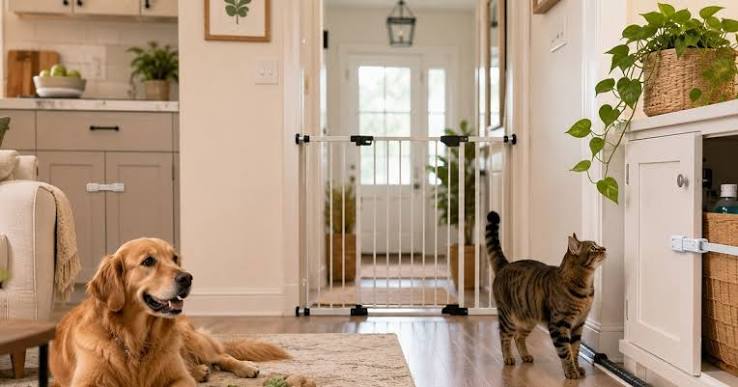
- Block access to rooms you have not fully pet-proofed with baby gates, closed doors, or exercise pens.
- Anchor unstable furniture and keep breakables off edges.
- Remove or relocate anything toxic to your species of pet, including certain plants and human foods.
Need a source beyond the house itself? The ASPCA Animal Poison Control Center and Pet Poison Helpline both maintain searchable guidance on toxic foods, plants, and household items. For fire and electrical concerns, the U.S. Consumer Product Safety Commission has practical home safety guidance that applies well to pet households. For general household poison prevention, the National Capital Poison Center is another authoritative reference.
Two honest limits: no checklist makes a home foolproof, and some pets ignore “safe” boundaries if they are bored, anxious, or undertrained. Pet-proofing works best when it removes temptation, not when it tries to rely on the pet’s judgment.
Quick check. When your pet is young, nosy, or oral, you need the “remove and block” version, not the “monitor and hope” version.
The Kitchen: Where Food and Trash Cause the Most Trouble
Counters, cabinets, trash. That trio causes most of the drama. When you have a trash-eater, a food-stealer, or a cat that jumps like a gymnast, then the standard advice—“just keep food put away”—is too weak. You need physical barriers.
Start with these moves:
- Put all human food in closed cabinets or in the refrigerator. No bread on the counter, no grapes in a bowl, no chocolate on the island.
- Use a trash can with a locking lid or keep it inside a cabinet with a child lock.
- Move dish soap, dishwasher pods, cleaning sprays, and degreasers into a high cabinet or latched cupboard.
- Check for dangling cords from kettles, air fryers, toasters, and slow cookers; shorten or bundle them so they cannot be pulled.
- Keep hot pans, knives, and sharp utensils out of reach while you cook.
- Never leave meat, bones, skewers, foil, twist ties, or toothpicks where a scavenger can grab them.
A cat who climbs counters needs a different response than a dog who countersurfs. For the climber, remove launch points: bar stools, nearby shelving, open dishwasher doors, and anything that gives access. For the thief, change storage habits and use a gate during cooking if needed. When your dog is large enough to reach the stove, keep pot handles turned inward and avoid leaving burners hot and unattended. If your pet has a habit of snatching food while you are distracted, management matters more than correction.
A small warning: “pet-safe cleaning products” is not the same as “safe if licked in a puddle.” Keep any cleaner out of reach until it is dry and the floor is clear. When your pet has already eaten something questionable, call your veterinarian or a poison hotline right away; do not wait to see symptoms. That math stops working fast.
Quick check: when your pet has ever stolen food or dug in the trash, your kitchen is not pet-proof until the garbage is locked and counters are cleared.
Living Room and Family Room: Cords, Furniture, and Small Objects
Cords, loose bits, and climbable furniture show up here first. When your living room is where your pet spends most of the day, it is also where they will find cords, loose objects, and places to jump from. When you have a teething puppy or a cat who treats blinds like prey, then cords are not a minor annoyance; they are a hazard, and a veterinarian can help if chewing is persistent or escalating.
Here is the path I would take:
- Gather charging cables, lamp cords, blind cords, and extension cords; route them behind furniture or through cord covers.
- Use cord shorteners, clips, or cable boxes so there is no hanging loop to chew or snag.
- Move remotes, headphones, game controllers, batteries, pens, needles, and small decor off low tables.
- Anchor bookshelves, TVs, tall lamps, and narrow cabinets to the wall if they could tip when climbed or bumped.
- Keep candles, matches, incense, and diffusers where paws cannot knock them over.
- Check under sofas and chairs for dropped pills, coins, earrings, and rubber bands.
A chewer does not care that something is “almost hidden.” A cord tucked behind a sofa is better than one hanging in the open, but a determined puppy may still drag it out. For that pet, use a combination of cord management and a physical barrier, like a playpen or gated room; if the chewing is intense or ongoing, ask a veterinarian or trainer for help.
Look up, too, when you live with a cat. Cats jump onto shelves, backs of sofas, and bookcases, then step down with whatever lands in their path. Remove fragile objects from the edges and keep breakables in closed cabinets. When your dog is older or unsteady, make sure pathways are clear so they do not slide into glass tables, sharp corners, or piles of décor.
One place people skip is the fireplace area. Screens matter. So do fireplace tools, fire starters, and ash buckets. When the fireplace is unused, close it off. When it is active, use a proper screen and assume your pet may investigate when the room changes temperature or sound.
| Situation | Best Path | Why Other Options Fail |
|---|---|---|
| Puppy chews cords | Hide, cover, and block access with a pen or gate; if the behavior continues, consult a veterinarian or trainer | Just saying “no” does not stop a bored puppy |
| Cat climbs furniture | Anchor tall furniture and clear ledges | Leaving décor in place creates fall and breakage risks |
| Older dog bumps into things | Clear pathways and secure fragile furniture | Training does not fix bad footing or narrow walkways |
Quick check: when your pet can reach a cord, climb a shelf, or tip a lamp, your living room still needs work.
Bedroom, Bathroom, and Laundry: The Quiet Hazards
Looks calm? Not really. When your pet sleeps where you sleep, the bedroom feels harmless—but it is full of swallowed items. When you keep pills on the nightstand, hair ties in a bowl, or shoes where a chewer can reach them, then the bedroom is not low-risk at all.
Use this sequence:
- Move all medications, supplements, gum, mints, and vape products into a closed cabinet or drawer with a child lock if needed.
- Pick up hair ties, sewing needles, safety pins, jewelry, and small accessories every night.
- Keep charging cords off the bed and away from teething mouths.
- Store laundry pods, bleach, fabric softener, and dryer sheets behind a latched door.
- Close toilet lids when you have a puppy, a dog that drinks from bowls and toilets alike, or a cat that loves splashing.
- Keep bathroom trash covered and empty it often.
Laundry rooms are a special trap. Dryer sheets, detergent pods, and dirty socks can all be tempting. A dog may chew a sock and swallow the elastic or fabric. A cat may paw into an open hamper and pull out stringy items. When you have a pet with pica or a history of eating fabric, do not leave baskets on the floor.
Bathrooms are risky for another reason: slippery surfaces. When your pet runs in after bath time or when the floor is wet, mats with traction help. So does shutting the door when you are not there. When you use essential oils, bath salts, or strong cleaners, keep them sealed and stored up high.
A generic article often forgets that “pet-proof” is also “pet-calm.” A nervous pet rummaging through your bedroom at night can find and eat things you would never think to pet-proof during the day. The fix is not one sweep; it is a habit.
Quick check: when you keep pills, laundry pods, or hair ties anywhere your pet can reach, start in the bedroom and laundry room.
Basement, Garage, and Utility Areas: Where the Biggest Mistakes Happen
Garage. Basement. Utility room. Treat them like hazard zones. When you store oil, antifreeze, rodent bait, paint, fertilizer, or tools there, then those rooms need more than tidying—they need access control.
Follow this path:
- Lock up all chemicals, fuels, pesticides, fertilizers, and automotive fluids in a cabinet or on a high shelf.
- Keep antifreeze, which is especially dangerous, sealed and unreachable at all times.
- Store sharp tools, screws, nails, drill bits, and blades in closed toolboxes or cabinets.
- Pick up extension cords and loose rope, twine, or zip ties.
- Block access to washer hoses, furnace areas, water heaters, and electrical panels.
- Keep the garage door, basement door, or utility door closed whenever possible.
When your pet is a digger, basement corners and garage edges can become nesting or chewing spots. When your pet likes warm places, they may curl near appliances or behind stacked boxes. That is why physical cleanup matters as much as storage.
I would be especially strict about rodent bait and insect traps. Many are designed to be tempting to the wrong animal. When you need pest control, choose placements and products with pet exposure in mind, and follow the label exactly. For any poison concern, contact a veterinarian or poison center immediately.
What standard advice gets wrong here is the idea that “out of reach” means “safe enough.” In these rooms, floor-level clutter is the problem. A bottle cap, a loose screw, a sock, or a piece of insulation can become a vet visit.
Quick check: when your garage or basement contains chemicals or tools, keep your pet out unless the room is fully controlled and inspected first.
Edge Cases Where the Usual Advice Breaks Down
Some homes just refuse the simple version. When your pet is blind, deaf, recovering from surgery, anxious, or unusually determined, the normal checklist needs adjustment. When you have more than one pet, one animal can defeat a safety setup made for the other. Here is where the usual advice breaks down:
- Small dog in a big-dog home → what changes: reach matters more than scale. What to do instead: lower your inspection to floor level, not counter level, because tiny dogs can get into gaps big dogs ignore.
- Cat that opens cabinets → what changes: latches matter more than tidy shelves. Another approach: use childproof cabinet locks on food, cleaning supplies, and trash.
- Puppy with a swallowing habit → what changes: tiny objects become the main threat. The better move is to sweep the floor multiple times a day and remove socks, toy parts, and cords from every room.
- Senior pet with weak legs or poor vision → what changes: falls and collisions matter more than chewing. Another approach: clear hallways, add non-slip rugs, and stop using furniture as an obstacle course.
- Multi-pet home with different behaviors → what changes: one pet may steal what another cannot reach. The better move is to separate feeding areas, use gates, and assume the smarter animal will find the loophole.
- Pet with a known medical or chewing disorder → what changes: you need professional guidance, not just home setup. Another approach: ask your veterinarian for a prevention plan, especially if your pet eats fabric, stones, or nonfood items.
When you are dealing with a pet who repeatedly eats dangerous objects, this is not a “better organizer” problem. It may be a training, enrichment, or medical issue, and your vet can help you sort that out.
Quick check: when your pet has special needs, a one-size-fits-all checklist will miss the real hazard.
What I Would Prioritize If I Had to Do This in One Afternoon
Only a few hours? Fine. Do not try to make every room perfect. Start where the emergency risk is highest. When your pet is young or destructive, I would focus first on the kitchen, then the living room, then the bedroom and laundry area. After that, close off the garage or basement.
A simple two-hour version looks like this:
- Lock trash and food storage.
- Gather cords and cover or move them.
- Pick up small objects from floors, tables, and nightstands.
- Close cabinets that hold cleaners or medications.
- Anchor one unstable piece of furniture.
The point is not to finish everything. The point is to remove the items most likely to send you to the emergency vet, and to do it before your pet finds them.
Want a quick reality check? Stand in each room and ask: can my pet chew it, swallow it, pull it down, or knock it over? When the answer is yes, fix that item before you move on.
How to Compare Safety Options Without Overthinking It
Choose the fix that physically blocks access. A baby gate beats a stern warning. A latched trash bin beats a decorative open basket. A cord cover beats hoping the cord stays boring.
Here is how the common alternatives stack up:
- Pet gates vs. closed doors → gates work when you need visibility; doors work better when the room should stay fully off-limits.
- Cord covers vs. hiding cords behind furniture → covers protect exposed runs; hiding cords is fine only if your pet cannot pull them back out.
- Child locks vs. higher shelving → locks are better for cabinets your pet can reach; height is enough only when jumping or climbing is not part of the problem.
- Open bins vs. sealed bins → sealed wins every time for food, litter, laundry, and trash.
- Training vs. management → training helps, but management is what protects the pet today.
The best choice depends on the pet, the room, and the behavior. A smart cat may defeat a simple latch. A large dog may shove through a flimsy gate. That is why pet-proofing is usually layered: one barrier, then another. Like a patchwork fix, but smarter.
When you need a single rule to remember, use this one: when a hazard has already been found once, treat it as a repeat hazard and change the room, not just the supervision.
Final Check Before You Call It Done
Once you finish a room, run the same test every time: can your pet reach it, chew it, eat it, tip it, or slip on it? When yes, it still needs work. When no, you are probably in good shape for now.
Before you stop, do one last sweep for obvious trouble:
– open bins
– dangling cords
– unsecured meds
– loose batteries
– food left on counters
– unstable furniture
– toxic plants
– reachable cleaners
Pet-proofing is not a one-time project. It is a set of habits that makes the house easier to live in for both of you.