Last updated: August 11, 2026
- First Aid for Heatstroke in Dogs: What To Do in the First 10 Minutes My advice is simple: move, cool, call.
- Quick Answer: Suspect heatstroke in your dog?
- According to the American Veterinary Medical Association, heatstroke can become life-threatening quickly.
- Key facts: – Heatstroke is an emergency, not a wait-and-see problem.
Quick Answer: Suspect heatstroke in your dog? Treat it as an emergency immediately: move the dog somewhere cooler, begin controlled cooling, and call a veterinarian right away.
Suspect heatstroke in your dog? Then this is not a “wait and see” moment. It can turn ugly fast. Cool the dog, get out of the heat, and call a veterinarian right away. According to the American Veterinary Medical Association, heatstroke can become life-threatening quickly.
Key facts:
– Heatstroke is an emergency, not a wait-and-see problem.
– Controlled cooling uses cool water and airflow, not ice baths.
– If the dog is weak, disoriented, vomiting, collapsing, or not improving fast, call a veterinarian immediately.
– Parked cars can become deadly in minutes; the AVMA and AKC both warn against leaving dogs in vehicles.
– Prevention is easiest when you act before the dog is in distress.
I write about pet health because I spend a lot of time separating real emergencies from false alarms, and heatstroke is one of the situations where hesitation hurts most. Honestly, a dog panting hard after exercise or after time in a hot car is exactly the kind of case this piece is meant to address. For the medical side, the Merck Veterinary Manual has a solid overview of heatstroke in dogs.
The Real Difference Between Overheating and Heatstroke
Overheating is the warning. Heatstroke is the system failing.
That split matters. A dog can look merely “too warm” and still be close to collapse. Mild overheating often shows up as heavy panting, restlessness, bright red gums, and an urge to lie down in the shade. Heatstroke is more serious: the dog may become weak, unsteady, confused, drooling, vomiting, or unable to stand. In bad cases, it can progress to collapse, seizures, or loss of consciousness.
Here’s the mistake I see most often: waiting for the dog to “cool off on their own.” Dogs do not dump heat the way humans do. They mostly cool by panting and, to a much smaller degree, through paw pads and a little through the skin. So a dog trapped in a parked car, pushed through exercise in heat, or stuck in muggy air can go downhill fast. Like a melting candle, the margin disappears before people notice.
A second mistake is grabbing ice-cold water or a full ice bath. Aggressive cooling can backfire if it makes the dog shiver hard or if it delays a vet visit. The goal is controlled cooling, not a shock to the system.
For authoritative background, I recommend the American Veterinary Medical Association’s guidance on heatstroke and the American Kennel Club’s veterinary advice on dogs and heat. If you want the medical side, the Merck Veterinary Manual also has a solid overview of heatstroke in dogs.
Heatstroke in Dogs: The Warning Signs I Would Never Ignore
I would treat these signs as urgent, especially after heat exposure or exercise, and I would call a veterinarian or emergency clinic right away:
- Heavy, nonstop panting that does not settle with rest
- Excessive drooling
- Bright red, dark red, or very pale gums
- Weakness, wobbling, or lying down when the dog does not want to move
- Vomiting or diarrhea
- Glassy eyes, confusion, or “not quite there” behavior
- Collapse, seizures, or unresponsiveness
The pattern matters as much as the symptom. A tired dog may pant for a few minutes after a run. A heatstroke dog often looks increasingly wrong, not better. The dog may seem anxious, then weak, then disoriented. If the tongue is very dark red, the breathing looks labored, or the dog cannot stand, I would not wait for more signs.
Some dogs show subtler clues first. A normally eager dog may refuse to keep walking. A brachycephalic dog — think bulldogs, pugs, and similar short-nosed breeds — may seem to hit a wall quickly. An older dog may just look dull and unstable. Puppies can also go downhill quickly because they have less reserve.
There is one warning sign people underestimate: a dog that stops panting normally and becomes quiet after being overheated is not necessarily okay. Sometimes that is fatigue; sometimes it is the body giving out.
First Aid for Heatstroke in Dogs: What To Do in the First 10 Minutes
My advice is simple: move, cool, call.
- Move the dog out of the heat immediately. Get into shade, air conditioning, or at least any cooler indoor space.
- Call a veterinarian or emergency clinic while you start cooling. Heatstroke needs professional assessment even if the dog improves.
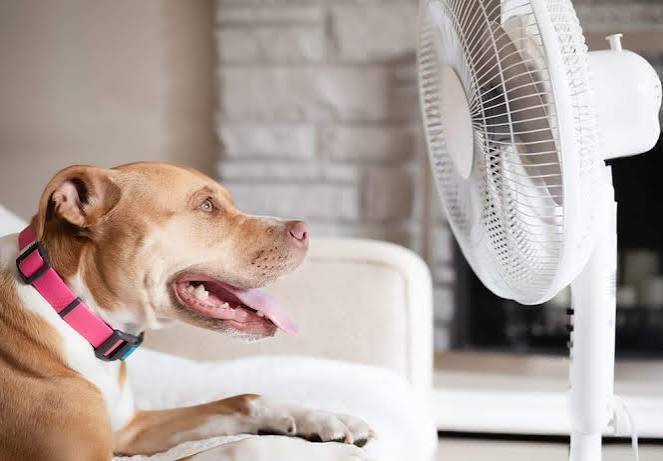
- Use cool, not ice-cold, water. Wet the body with cool water and use airflow if possible. A fan helps because moving air speeds evaporation.
- Focus on the neck, chest, belly, and paws. Those areas help with cooling and are easy to wet.
- Offer small amounts of water only if the dog is awake and able to swallow. Do not force water into the mouth.
- Stop cooling when the dog starts to feel better and head to the vet. You are aiming to lower the temperature safely, not keep the dog soaking for a long time.
Do not wrap the dog tightly in wet towels and do not leave the dog in a closed bathroom or crate while “cooling.” That traps heat. Also, do not delay because the dog seems to perk up after a few minutes. Heatstroke can cause hidden organ damage even when outward signs fade.
If the dog is collapsing, seizing, or struggling to breathe, this is an emergency transport situation. Call ahead, keep cooling as you go, and get to the clinic.
The Honest Side-by-Side: Safe Cooling vs. Dangerous Mistakes

| Criteria | Safe First Aid | Common Mistake | Winner for Heatstroke |
|---|---|---|---|
| Water temperature | Cool water that helps evaporation | Ice water or an ice bath | Safe First Aid |
| Airflow | Fan or moving air | Still room with wet fur | Safe First Aid |
| Urgency | Vet contact starts immediately | “Let’s see if this passes” | Safe First Aid |
| Hydration | Small sips only if alert | Forcing water | Safe First Aid |
| Transport | Go to a clinic after initial cooling | Stay home because the dog looks better | Safe First Aid |
| Monitoring | Watch breathing, gums, and strength | Only watch for panting to stop | Safe First Aid |
| Long-term risk | Lower chance of missing hidden injury | Higher chance of kidney, liver, or clotting problems going unnoticed | Safe First Aid |
| Best use case | Any suspected heatstroke case | Never the right choice | Safe First Aid |
The table is blunt on purpose: heatstroke is not the time for improvisation. The “common mistake” column is where people lose time. I would rather see an owner do controlled cooling and get to a vet too early than wait for certainty. Certainty is often what wrecks the margin.
The Specific Situations Where Prevention Wins
Prevention wins for every dog, but it matters most for the animals and settings that build heat fast. If you have a brachycephalic dog, a senior dog, a dog with heart or breathing issues, a thick-coated breed, or a dog that gets frantic when excited, I would treat heat prevention as a daily habit in warm weather.
Here is what actually changes outcomes:
- Exercise timing. Walk early or late, not in midday heat.
- Humidity awareness. Humid air makes panting less effective.
- Shade and water. A water bowl and shade are not “extras”; they are basic gear.
- Vehicle caution. A parked car is dangerous even on days that do not feel scorching.
- Surface temperature. Asphalt and metal fixtures can trap and radiate heat.
- Acclimation. A dog used to cool weather needs a slower ramp into warm-weather activity.
People also underestimate indoor heat, and that part trips them up. A dog can struggle in a stuffy room, a greenhouse-like sunroom, or a home with poor airflow. A dog panting hard inside, with no exercise behind it, is a clue to check the environment, not just the dog. According to the AKC, cars and poorly ventilated spaces can become dangerous quickly.
The weakness of prevention is simple: it demands discipline before there is a problem. That is also why it works. A lot of heatstroke cases are not freak accidents; they are predictable situations with one bad decision stacked on another.
If you want one rule to keep: if your dog cannot cool efficiently, do not ask the body to pay for extra activity.
Our Verdict: Which One to Choose and Why
Choose controlled cooling plus immediate veterinary care if your dog is showing any heatstroke signs after heat exposure, exercise, or time in a car. Choose prevention if your dog is healthy, comfortable, and not yet in distress, because that is the stage where you still have room to act early. Should the dog be unconscious, seizing, or unable to breathe well, do not wait and see; get emergency help.
My view is plain: once the dog is symptomatic, first aid is the right move; prevention is already off the table. If the dog is not symptomatic, prevention is the better choice because it avoids the whole emergency.
That is the decision tree I would want in my own hands. Heatstroke often rewards the person who acts before the situation looks dramatic, then treats it as serious the moment it does.
When to Reconsider This Choice Entirely
A few cases change the usual advice:
- The dog is already collapsing or unconscious. This is not a home-management situation. Start cooling if you can safely do so and go to emergency care now.
- The dog has underlying disease. Heart disease, airway disease, obesity, and some neurologic problems can make heat risk much higher. I would be more conservative about exercise and outdoor time.
- The dog is a flat-faced breed. These dogs can overheat in situations that seem minor for other dogs. A short walk can be enough to cause trouble.
- The environment is the real problem. If the home, car, yard, or crate is too hot, changing the setting matters more than any “cooling trick.”
I would also reconsider any plan that depends on the dog “telling you” when it is done. Dogs often keep moving until they can’t. That is not toughness; it is a warning light that comes on late. A parked car, a greenhouse-like room, or a hot yard can turn serious in minutes.
The trade-off is honest: prevention asks for more attention from the owner, while first aid asks for rapid calm under pressure. Heatstroke gives you very little room for inaction, and neither approach works if you half-commit.
Practical Prevention Checklist I Would Use
I would keep this list simple:
- Walk in cooler parts of the day.
- Bring water on outings.
- Give shade and airflow.
- Never leave a dog in a parked car.
- Watch for heavy panting, especially in humid weather.
- Reduce intensity for brachycephalic, old, overweight, or sick dogs.
- Stop activity at the first sign the dog is not recovering normally.
- Learn the nearest emergency vet before summer starts.
If you want one mental shortcut, use this: heat plus panting plus worsening behavior equals emergency until proven otherwise.
FAQ
How do I know if my dog has heatstroke or is just hot?
If the dog is only warm and recovers quickly after rest in shade, that may be simple overheating. When panting is intense, the dog is weak, disoriented, vomiting, or not improving fast, treat it as heatstroke and call a veterinarian.
Should I use ice water on my dog?
I would not start with ice-cold water. Cool water and airflow are safer and more useful for gradual cooling.
Can a dog recover from heatstroke at home?
Some dogs may look better after cooling, but I would still push for veterinary evaluation because organ damage can be hidden at first.
Which dogs are at highest risk?
Flat-faced breeds, overweight dogs, senior dogs, dogs with heart or airway disease, and dogs exercised in heat or humidity are at higher risk.
What is the single best prevention step?
Avoid heat exposure in the first place: no parked cars, no midday exertion, and no activity when the weather is hot and humid.