Last updated: August 11, 2026
- Quick check: Could you handle a bleeding paw or a sudden limp right now without improvising for 10 minutes?
- Key Facts – 12 core items cover most common pet first aid needs.
- A hurt pet changes the whole mood fast.
- The Core Pet First Aid Kit Items I Would Pack First Starting from scratch?
Quick Answer: A practical pet first aid kit essentials: what pack when use each item setup usually needs 12 core items, plus any vet-specific meds your clinician has already approved. It buys you time, but it does not replace veterinary care. Bleeding, debris, and a worsening injury are the main things it helps you manage before professional help takes over.
Key Facts
– 12 core items cover most common pet first aid needs.
– 3 kit versions work best for home, car, and travel.
– 2 authoritative resources to keep handy: the American Red Cross and the ASPCA Animal Poison Control Center.
– 1 rule matters most: stabilize first, then get veterinary help.
– 0 human pain relievers should go in a basic kit unless your vet specifically prescribes them.
A hurt pet changes the whole mood fast. The right pet first aid kit gives you a little breathing room and a calmer ride to the clinic. It does not replace veterinary care. Bleeding, debris, and a worsening injury are the main things it helps you manage before professional help takes over.
What Actually Determines the Right Pet First Aid Kit
One answer covers most cases: pack for the problems you are most likely to meet on walks, hikes, car rides, and around the house, not for dramatic emergencies you may never see. Bleeding, sprains, eye irritation, paw injuries, choking risk, and accidental poisoning are the big ones. And if your pet chews everything, bolts under furniture, or spends weekends on trails, the bag should match that reality.
I would divide the kit into two layers. One layer is the universal basics that belong in nearly every bag; the other depends on size, habits, and where your pet spends time. A city dog needs different extras than a hunting dog. A cat carrier kit looks different from a horse trailer kit.
Here is the simplest way to think about it:
| Situation | Best Path | Why Other Options Fail |
|---|---|---|
| Short walks, errands, day trips | Compact kit with bleeding control, saline, gauze, and a muzzle | Large medical bags are bulky and usually stay in the car when you need them most |
| Hikes, camping, remote travel | Expanded kit with splinting materials, extra wrap, tick remover, and a copy of medical records | Minimal kits leave you stuck if a paw is cut or a leg is injured far from help |
| Pets with known medical risks | Add prescription items your vet recommends and written dosing instructions | Guessing with human medicines can make the problem worse |
A generic “pet first aid” checklist often gets this wrong by filling the bag with random extras and skipping the dull stuff that actually earns its keep. Boring? Sure. But those are the items you end up reaching for.
Quick check: Could you handle a bleeding paw or a sudden limp right now without improvising for 10 minutes?
The Core Pet First Aid Kit Items I Would Pack First

Starting from scratch? Begin with the pieces that solve the widest spread of real problems. I’d pack these before I even think about specialty tools.
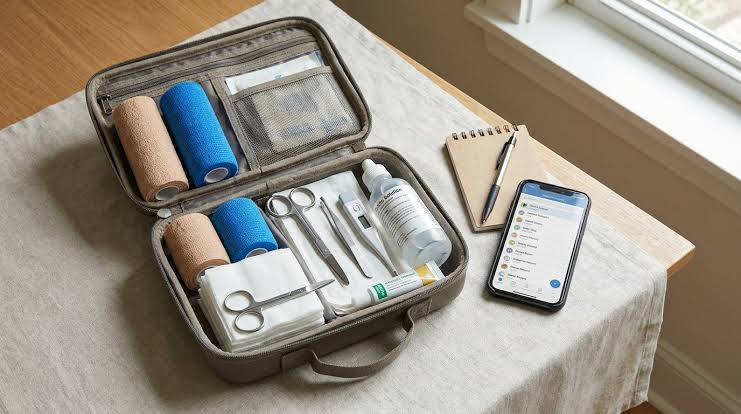
- Sterile saline solution for flushing dirt, pollen, or loose debris from eyes and superficial wounds. Use it when the eye is irritated or a cut needs a gentle rinse. Do not use it to “clean deep” punctures.
- Gauze pads and rolled gauze for direct pressure on bleeding and for covering wounds. If blood soaks through, add more on top rather than peeling layers off.
- Self-adherent wrap to hold gauze in place. Use it loosely; tight wrapping can cut off circulation.
- Medical tape for securing gauze or wrap. Tape is especially useful on short-haired pets where wraps slip.
- Non-stick wound pads for scraped skin or shallow cuts. They reduce pain when you remove the dressing.
- Blunt-tip scissors for trimming fur away from a wound or cutting bandage material. Sharp household scissors are riskier near skin.
- Digital thermometer for checking temperature if your pet seems weak, shivery, or overheated. Normal ranges vary by species, so ask your veterinarian what is normal for your pet.
- Disposable gloves for protecting you and the wound from contamination.
- Instant cold pack for swelling, bruising, and soft-tissue injuries. Wrap it in cloth; never press it directly on skin.
- Digital pet muzzle or soft muzzle because injured animals can bite, even sweet ones. Do not use a muzzle if your pet is vomiting, struggling to breathe, or overheated.
- Tick remover tool or fine tweezers for tick removal. Pull straight out with steady pressure.
- Emergency contact card with your vet, nearest 24-hour clinic, and animal poison help line.
If your pet has allergies, ear trouble, or lots of outdoor time, add species- and vet-specific items later. Honestly, I would not start with ointments, pain relievers, or sedatives unless a veterinarian told you exactly what to keep.
For authoritative guidance on first aid and emergency signs, I trust the American Red Cross pet first aid resources and the ASPCA Animal Poison Control Center:
– American Red Cross pet first aid: https://www.redcross.org/get-help/how-to-prepare-for-emergencies/anatomy-of-a-home-pet-first-aid-kit.html
– ASPCA Animal Poison Control Center: https://www.aspca.org/pet-care/animal-poison-control
Quick check: If your kit holds only “cute” extras and no gauze, saline, or a muzzle, it is not ready yet.
When Each Item Gets Used, and When It Does Not
Bleeding does not call for “more products.” It calls for pressure. Start with gauze, add more gauze if needed, then use wrap to keep pressure in place. If blood soaks through quickly or spurts, you need veterinary care fast. A first aid kit is for control, not cure; if you are unsure how serious the bleeding is, contact a veterinarian or emergency clinic right away.
Red, watery eyes after dust or grass exposure usually point to saline first. Flush gently. But if the eye looks cloudy, the pupil seems odd, the eye is closed shut, or there may be a scratch, stop guessing and get it checked promptly. Eye injuries can go sideways quickly.
A cut paw pad or torn nail? Clean the area, cover it with a non-stick pad, and keep the dog from licking it. If the nail is split and dangling, do not yank it off. Stabilize and go to the vet.
Limping after a jump can sometimes be eased with a cold pack and rest while you arrange care. But if the limb looks crooked, the pet will not bear weight, or the pain is severe, skip the “wait and see” instinct. Splints can help in some cases; a bad splint can turn a problem into a bigger one. No thanks.
Suspect poisoning? The most useful kit item is not activated charcoal from a random store shelf. It is the phone number for poison help and the package or plant name. Call immediately. Human meds, food, and home remedies are where people get into trouble.
The trap is using the kit when the pet really needs a clinic, or freezing up and touching nothing at all. The bag is a bridge. Use it to stabilize, not to diagnose; if you are not sure which it is, consult a veterinarian.
Quick check: Are you trying to treat a wound, or are you trying to decide whether this is already a vet visit? The answer changes what you do next, and a vet can help you sort it out.
How I’d Pack the Kit for Home, Car, and Travel

One box on a shelf sounds organized until you need it in the car and it’s sitting at home. I’d make three versions: a full kit for home, a smaller kit for the car, and a travel pouch for outings. Fussy? Maybe. But the first time a dog slices a paw at a trailhead or a cat starts vomiting on a road trip, that extra effort stops feeling silly.
Use this order:
- Build the home kit first. Put your biggest supply of gauze, saline, wrap, tape, gloves, scissors, thermometer, tick remover, and printed emergency contacts in one easy-to-grab container.
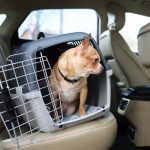
- Add the car kit. Copy the bleeding-control basics, muzzle, gloves, saline, and a towel into a smaller bag that stays with the vehicle.
- Make the travel pouch. Use a zippered pouch or small organizer with only the items you can deploy fast: gauze, wrap, saline, gloves, muzzle, and your emergency card.
- Include your pet’s records. Keep vaccination info, current medications, and your vet’s number with the home kit or on your phone.
- Check expiration and condition regularly. Replace opened saline, crumbling tape, dirty scissors, and anything that has been heat-damaged in a hot car.
Heat wrecks kits. A trunk in summer can be a terrible place for some supplies, plain and simple. If you must keep a kit in the car, check it often and avoid leaving sensitive items there for long periods. I’d also keep a flashlight in the car kit. Night injuries are harder than daytime ones because you cannot see the wound clearly.
A pet first aid kit works better when the human side is squared away too. Put the clinic numbers in your phone and on paper. Keep a towel, leash, or carrier right beside the kit. If your pet is panicking, the fastest bandage in the world will not help if you cannot restrain the animal safely.
Quick check: Would the right kit still be with you if you grabbed your keys and left in a hurry?
The Items People Add Too Soon
Already covered the basics? Good. Then the next question is what to leave out. I would skip human pain relievers, random antiseptics, and anything you do not know how to use on an awake, scared animal.
Human pain medicines like ibuprofen and acetaminophen can be dangerous for pets. I am not being dramatic here; I am saying it because people reach for what feels familiar. Bad move. If your veterinarian wants you to keep a medication on hand, follow the exact product and dose they give you in writing.
Hydrogen peroxide deserves caution too. People still treat it like a universal fix, but it can irritate tissue and is not a safe default for every emergency. The same warning applies to antibiotic ointments, essential oils, alcohol, and peroxide wipes. Some are too irritating, some are unsafe if licked, and some are simply the wrong tool.
The better question is not “What else can I stuff in the bag?” It is “What would I confidently know how to use under stress?” A small, familiar kit beats a large box of mystery items. If an item needs a demo from your vet, ask for that demo before you store it.
This is also where I’d be blunt about who a basic kit is not for. If your pet has a seizure disorder, diabetes, severe allergies, a history of collapsing, or a complicated prescription plan, you need a vet-guided kit, not a generic one. Same story for working animals or pets headed into remote areas. Their kits should be built with a professional.
Quick check: Would you hesitate before using an item? Then it probably should not be in the regular kit.
Edge Cases: When the Normal Advice Breaks Down
Strange situation? Then the usual “clean, bandage, watch” advice can fail fast. These are the cases I would handle differently, and a veterinarian should get involved sooner rather than later.
-
Deep puncture wound
Situation → a tooth puncture or thorn puncture that looks small on the outside.
What changes → the surface may hide deeper damage or infection risk.
What to do instead → gently control bleeding, keep the pet from licking, and call the vet the same day. Do not probe the hole. -
Burns
Situation → hot pavement, stove contact, chemical splash, or scalding water.
What changes → cooling matters, but harsh cleaners make things worse.
What to do instead → flush with cool water for a limited period, cover loosely with a clean dressing, and get veterinary advice promptly. Do not apply butter, ointments, or ice. -
Choking or breathing trouble
Situation → gagging, pawing at the mouth, blue gums, open-mouth distress.
What changes → time matters more than bandaging.
What to do instead → check the mouth only if it is safe, avoid blind finger sweeps, and seek emergency care immediately. -
Eye trauma
Situation → squinting, cloudiness, a visible scratch, or a foreign body you can see.
What changes → you can worsen an eye injury with rough handling.
What to do instead → flush gently with saline if debris is loose, then go to the vet. Do not patch the eye or delay. -
Heat stress
Situation → heavy panting, weakness, vomiting, bright red gums, collapse.
What changes → this is not a “cool it and wait” problem.
What to do instead → move to shade or AC, offer small amounts of cool water if the pet can drink, wet with cool—not icy—water, and seek emergency care. -
Very small pets or brachycephalic breeds
Situation → tiny dogs, cats, or flat-faced breeds that get stressed easily.
What changes → some restraints and wraps become risky faster.
What to do instead → use the lightest effective pressure, keep them calm, and involve the vet sooner rather than later.
Quick check: If the pet is struggling to breathe, has an eye injury, or has a deep puncture, do not wait to see whether the kit alone fixes it.