Last updated: October 22, 2026
Quick Answer: most dogs do best with a 30-second to 5-minute graded exposure plan, a quiet cabin, and one consistent restraint setup. How to Keep a Dog Calm in the Car Without Medication works best when you start parked, reward calm, and only add movement after the dog can settle.
Key Takeaways
- Build calm by starting with parked-car practice and tiny steps.
- Use brief 30-second to 5-minute sessions and increase slowly.
- Choose the restraint that helps your dog feel secure without extra stress.
- If the dog shows stress, reduce the challenge or pause the plan.
If your dog gets shaky, drooly, vocal, or tries to climb into your lap on car rides, the fix is usually car travel desensitization plus a tighter routine, not medication. In short: start with very short parked sessions, pair the car with food and calm exits, then build to 1- to 5-minute drives only after the dog can settle with the engine running.
This guide on How to Keep a Dog Calm in the Car Without Medication is for a dog that is physically healthy enough for short practice rides, and for a person who can follow guidance from a qualified veterinarian or behavior professional if the dog has vomiting, panic, or a sudden change in car behavior. It assumes the problem is travel stress, motion stress, or overexcitement, not a medical emergency. If the dog vomits frequently, panics hard enough to injure itself, or has a sudden change in car behavior, speak with a qualified veterinarian or behavior professional about the individual case before pushing ahead.
For related restraint and crash-safety context, the hub on pet travel safety covers the broader subject. This page stays focused on reducing anxiety without medication.
Who this helps — and who needs a different plan
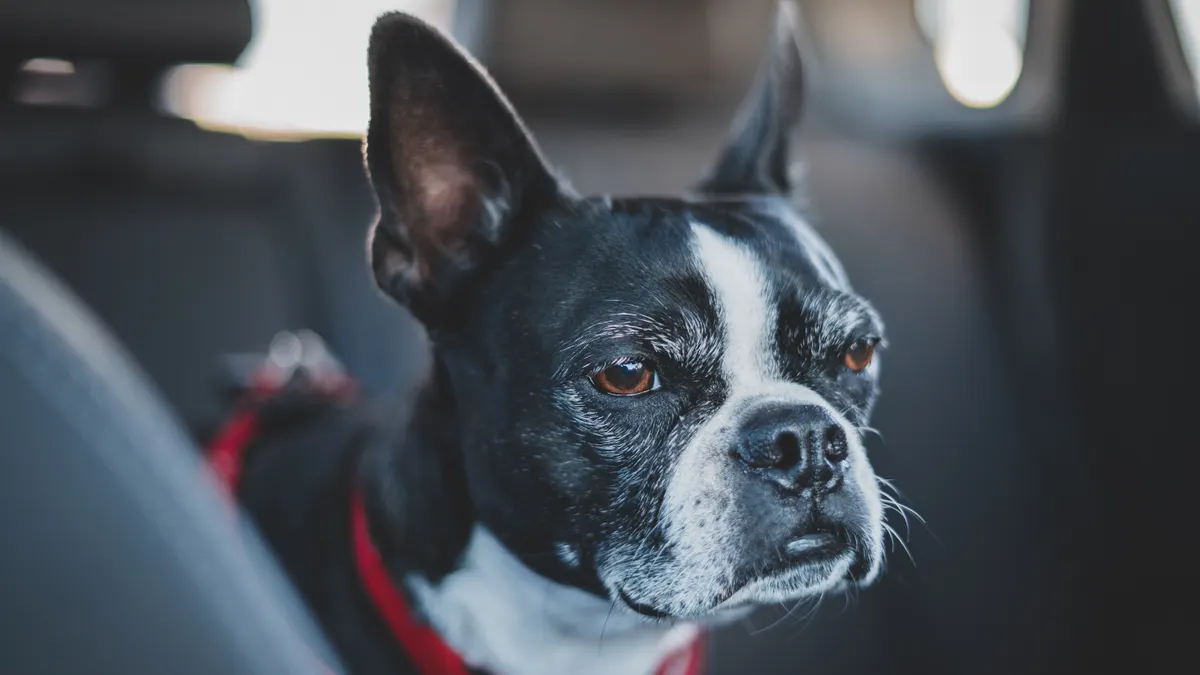
This approach helps dogs that start to settle once the car stops being a predictor of chaos. It fits a puppy learning the car, an adult dog that pants and whines on the way to the park, or a dog that associates the vehicle with only stressful destinations. It does not solve every car problem.
A dog with repeated vomiting, severe vestibular signs such as head tilt or loss of balance, or behavior that looks more like panic than nerves may need veterinary input before training. The same is true if the dog has a history of escape attempts, self-injury, or aggression in the car. Desensitization works best when the dog can still think. When the dog is already over threshold, training becomes a fight.
The other assumption matters too: the car must be physically comfortable enough to learn in. A hot back seat, slippery floor, or loose setup can undo good training. A crate or harness is useful here for structure, but this article does not rank crash-tested products or compare brands. It focuses on how to reduce stress using distance, predictability, and short exposures.
One more hard truth: if every ride ends at the groomer, the vet, or a place the dog hates, the car itself can become the warning signal. That is where the training plan has to start with neutral or pleasant trips, not more “just get used to it” driving.
What to set up before the first ride
A calm car starts before the engine turns on. The goal is to remove avoidable stressors and make the first session short enough that the dog can succeed. Gather treats in pea-sized pieces, a fitted harness or secure crate setup, water for longer outings, and a towel or non-slip mat if the floor or seat is slick.
Temperature matters. Aim for a cabin that feels comfortable to an adult human in a T-shirt, with air moving before the dog gets hot. On mild days, cracked windows are not a substitute for ventilation; use the car’s airflow so the dog is not sitting in stale heat. In warm weather, never leave the dog in a parked car to “wait a minute” while the training is happening.
Noise is part of the picture too. Loud music, slamming doors, and a cluttered cargo area can turn a manageable ride into sensory overload. Keep the first sessions quiet. Turn off the radio, close doors gently, and remove loose items that rattle. If the dog startles at backing alarms or turn signals, choose a quieter parking area for practice.
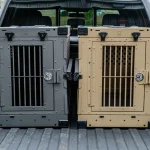
Decide where the dog will ride. A crate can help some dogs feel contained and remove the chance to pace. A harness can help a dog that panics when enclosed. A car seat can work for a small dog that benefits from a raised, defined spot. The point is not the brand or style; the point is consistency. Pick one setup and use it the same way every time during training.
How to keep a dog calm in the car, step by step

The simplest version is a graded exposure plan: start with the car standing still, then build tiny successes in 30-second to 5-minute increments. Each step should end before the dog loses composure.
- Feed calm in the driveway first. Sit with the dog near the parked car for 2–5 minutes and offer a few treats for looking at the car, then relaxing away from it. If a qualified veterinarian or behavior professional has advised this kind of exposure work for your dog, verify that the dog can eat, sniff, and keep four paws loose. If the dog freezes, refuses food, or tries to leave, the starting point is too hard.
- Let the dog enter the car without the engine on. Use the same door each time, guide the dog into the crate, car seat, or harness position, and stay there for 1–3 minutes. If a qualified veterinarian or behavior professional agrees the setup is appropriate, verify that the dog can stand, sit, or lie down without scrabbling. If the dog claws at the seat, pants hard, or springs back out, shorten the session.
- Pair the parked car with food and quiet. Give 3–5 tiny treats, then end the session before the dog gets restless. Keep the total under 5 minutes at first. If a qualified veterinarian or behavior professional has not suggested a different pace, verify that the dog leaves the car before becoming upset. If the dog is only willing to eat for a second and then scans the lot, the exposure is still too intense.
- Introduce the engine while stationary. Start the car and leave it parked for 30–60 seconds, then up to 2 minutes as long as the dog stays calm. Verify that the dog can tolerate vibration and engine noise without vocalizing or pacing. If the dog escalates the moment the key turns or the start button presses, go back one step.
- Drive a very short route with a neutral ending. Take a loop of about 1–3 minutes and return to the starting point or another calm, low-stimulation location. Verify that the dog can get out and still accept treats. If the dog arrives frantic, the route is too long or the destination is too exciting.
- Repeat short practice rides before adding real trips. Do several sessions on separate days, then extend to 5–10 minutes only after the dog recovers quickly after each ride. Verify that recovery means the dog can sniff, drink, or settle within a short period after exiting. If recovery takes a long time, hold the current step.
- Change only one variable at a time. Keep the route, time of day, restraint choice, and passenger setup the same until the dog is steady. Verify that the dog’s behavior improves under the same conditions. If you change three things at once, you will not know what helped or hurt.
- End on a success, not on exhaustion. Stop while the dog is still under threshold, then unload calmly and give a quiet break. Verify that the last 30 seconds of the session looked easier than the first. If you wait for the dog to “get used to it” by pushing through stress, the car becomes a place the dog wants to escape.
This is the heart of car travel desensitization: the dog learns that the car can happen without a bad event following it every time. The shift is slow because the nervous system is learning, not because the dog is being stubborn.
Which setup is easier: a crate, a harness, or a car seat?
The best setup is the one that keeps the dog secure enough to relax without adding more stress. A crate often helps dogs that feel safer with boundaries and less movement. A harness can help dogs that hate enclosed spaces but still need to stay anchored. A car seat can work for small dogs that settle better when they are elevated and contained.
A crate is usually the cleanest option for motion-sensitive dogs that are calmed by den-like structure. It reduces roaming and can make the space more predictable, especially if the crate is introduced at home first. The trade-off is that some dogs panic when closed in. If the dog fights the crate in the driveway, the crate itself becomes part of the problem.
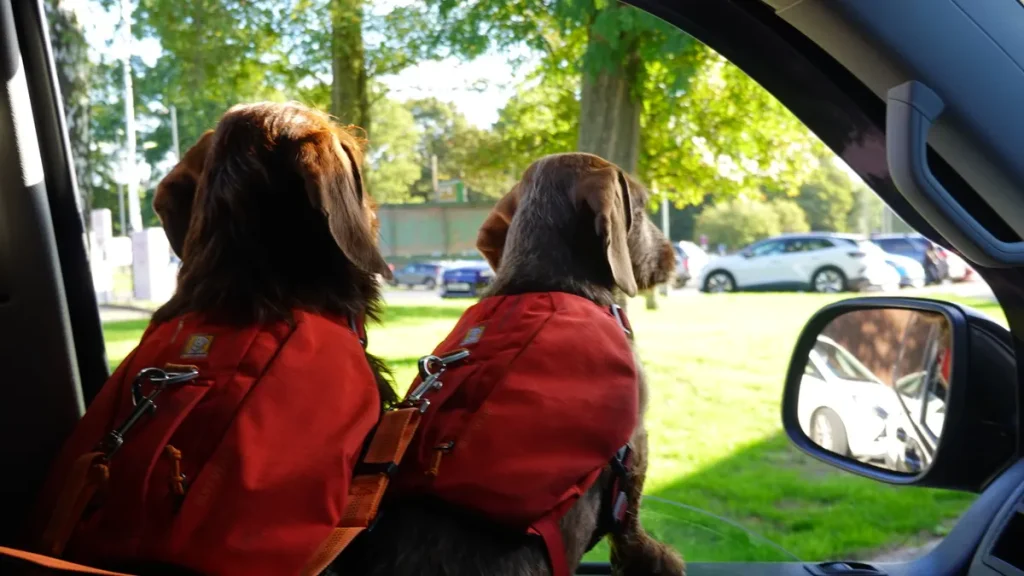
A harness is often better for dogs that need to see out or breathe freely without confinement. It can also be easier for dogs that already wear a harness every day. The trade-off is that some dogs read a harness as “walk time” and get excited before the car even moves. A secure tether system also has to be set up correctly so the dog is not sliding or twisting around.
A car seat is mainly a comfort choice for small dogs, not a universal answer. It may help a dog that wants height and a defined perch. The trade-off is that it is not ideal for every motion-sensitive dog, and some small dogs become more aroused when they can see too much out the window.
The key is not to switch back and forth every trip. Pick one arrangement, use it for at least several training sessions, and judge whether the dog settles faster, eats better, and recovers sooner.
What to do if the usual plan is not working
Stop or change course when the dog is telling you the current plan is too much. A training method that ignores warning signs usually makes the car harder, not easier.
Vomiting on the ride: This may be motion stress rather than pure anxiety — shorten the route, avoid feeding right before travel, and ask a veterinarian about the pattern before building more rides.
Panting, drooling, and trembling that start before the car moves: This suggests anticipatory stress — go back to parked-car practice and make the setup quieter and shorter.
Scrabbling, lunging, or trying to climb the seatbacks: This means the dog is over threshold — stop the session and reduce the level of challenge next time.
Refusing food in the car for several sessions in a row: This usually means the dog is too activated to learn — use a lower-intensity step, such as sitting near the parked car instead of riding.
Sudden new car anxiety in an adult dog: A change like this can point to pain, nausea, or another medical issue — get the dog checked before assuming it is just behavior.
Escape attempts at doors or windows: This is a safety problem as well as a training problem — keep the dog secured and do not use the car as a place to “work through it.”
The mistakes that make car anxiety worse
The most common mistake is jumping straight to a real errand. One 20-minute trip can erase several days of careful setup if the dog panics and the car only predicts bad news. The better choice is a 1- to 3-minute practice loop with no stressful destination.
Another mistake is overfeeding praise, treats, and speech when the dog is already aroused. Too much excitement can push the dog higher instead of calming it. A quieter reward pattern works better: small treats, low voice, brief sessions, then out.
A third mistake is changing the route every time. Dogs that are anxious about car travel often do better when the pattern is boring. The same parking lot, the same door, the same 2-minute loop, and the same parking return can create predictability.
A fourth mistake is using a hot or noisy car. Even a good training plan can fail in a cabin that is too warm or full of rattling objects. If the car is part of the stress, fix the car first.
A fifth mistake is waiting for the dog to “settle on its own” after it has already hit panic. At that point, the nervous system is no longer learning the lesson you want. The right move is to shorten the exposure and make the next attempt easier.
How long it takes, and what a good result looks like
The timeline varies by dog, but the right measure is not a calendar date. It is behavior. A good result looks like a dog that can enter the car, remain reasonably quiet on a short ride, and exit without a prolonged meltdown. The dog may still prefer the car to stay boring, and that is fine.
A useful milestone is when the dog can handle several 1- to 5-minute practice rides on different days without escalating before departure. Another milestone is when the dog can recover after the ride rather than staying keyed up for the rest of the day. That is the sign that the car is becoming neutral, not exciting or scary.
If progress stalls for 2 or 3 weeks, the plan usually needs less intensity, not more pressure. Shorten the ride, simplify the setup, reduce noise, and look again at temperature and motion cues. If the dog still cannot settle, the issue may be bigger than standard training can handle alone.
For broader travel planning, the pet travel safety hub is the right next stop; it covers restraint and trip safety without repeating this behavioral work. The training here and the safety setup there should fit together.
Why does my dog get anxious in the car?
The car can predict a destination the dog dislikes, or it can feel physically uncomfortable. Motion stress, loud noise, heat, confinement, and loss of control all matter. Some dogs also build a strong association between the car and vet visits, separation, or rough handling, so the anxiety starts before the engine even turns on.
How can I help my dog with car anxiety?
Start with very short desensitization sessions, not long rides. Begin in a parked car, reward calm behavior, and build up only when the dog can stay settled. Keep the cabin cool, quiet, and predictable, and choose one travel setup — crate, harness, or car seat — so the dog is not learning a different system every time.
Is it better to crate a dog or use a harness in the car?
It depends on what makes the dog calmer and safer. A crate suits some dogs because it gives them boundaries and reduces movement. A harness suits dogs that dislike enclosure. A car seat can help small dogs that settle better when elevated.
Drafted with AI; not yet reviewed by a person.