Last updated: October 25, 2026
Quick Answer: secure the crate to the vehicle’s anchor points, stop it from sliding, and place it where it cannot tip, block the driver, or get blasted by wind. A pet crate tie-down setup in an SUV or pickup bed works best when the crate is braced against a flat surface, strapped at two points, and checked for movement before driving. For a broader overview, see pet travel safety.
Key Takeaways
- Use a crate, two strong straps, and vehicle anchor points, not loose cargo.
- Put the crate low, flat, and square in the safest available spot.
- Grip underneath and tension above or beside the crate are both important.
- Seatbelts and cargo tie-downs work only when they attach to the vehicle, not soft trim.
What you need before you start
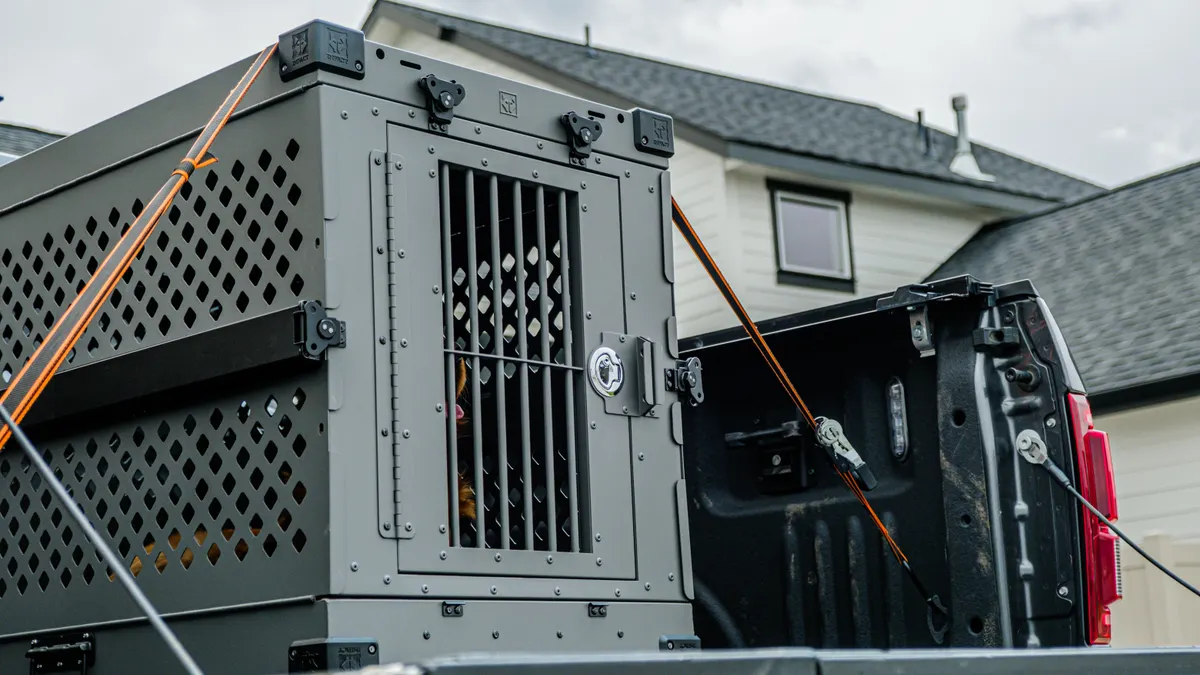
You need the right crate, two sturdy straps, and anchor points that are built into the vehicle — not loose cargo. For an SUV, that usually means the rear cargo loops or the rear seatbelt anchors if the crate sits on the folded seat base. For a pickup bed, use the factory tie-downs in the bed or a bed-mounted anchor system, not the tailgate. For safety hardware basics, see cargo tie-down anchors.
Start with a hard-sided crate whenever possible. A wire crate can work in a pinch inside an SUV, but it is harder to keep from shifting and can flex under strap pressure. A plastic kennel with a molded base is easier to stabilize because it has a flatter footprint.
Gather these first:
- 2 ratchet straps or cam-buckle straps, preferably 1-inch webbing or wider
- A non-slip mat, rubber shelf liner, or a cut-to-fit rubber mat
- A crate that leaves a few inches of space around ventilation openings
- Optional: load bar, cargo block, or wedge cushion for dead space
- A towel or crate pad only if it does not block airflow or encourage sliding
Do not use bungee cords as the main restraint. They stretch. That means the crate moves.
One practical rule helps here: if the crate can still slide an inch or two by hand before you strap it, it will move more once the vehicle turns or brakes. Solve the floor contact first, then the tie-downs. Otherwise, you are just chasing it.
Where should the crate go in an SUV or pickup bed?
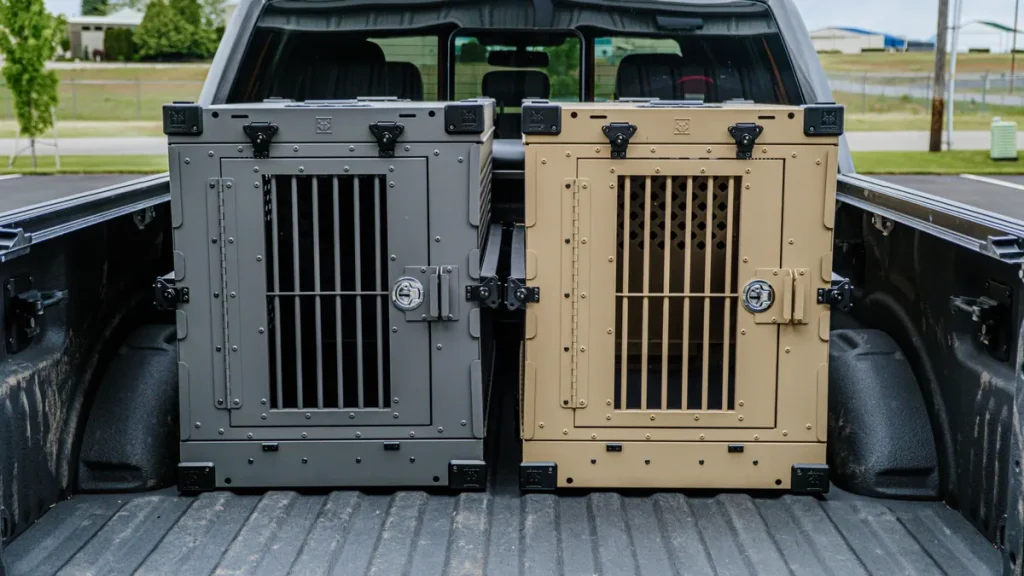
The safest spot is the flattest, lowest, least exposed place that lets the crate sit square. In an SUV, that is usually the cargo floor behind the second row or the folded rear seat base if the crate fits cleanly. In a pickup bed, place the crate near the cab wall, not at the tailgate, so it sits farther from turbulence and is less likely to drift toward the open edge.
Level matters. In an SUV, the crate should sit level with the floor. If it rocks on a hump, wheel well, or folded seat latch, use a rigid spacer or choose a different orientation. A crate that tilts 5 degrees may not sound like much, but it can change how the straps load during braking.
A pickup bed brings a different problem set. Wind and road spray matter too. The bed is open to air, and an unshielded crate can collect dirt, rain, and debris fast. If the crate rides in a bed, it needs more restraint and more weather protection than the same crate inside an SUV. A cap or cover helps, but it does not replace tie-downs. The pickup bed cargo cover guide explains the difference.
Do not place the crate where it blocks the rearview mirror line, interferes with hatch closure, or prevents the tailgate from latching. In an SUV, leave enough room for the hatch to close without pressing directly on the crate unless the crate is designed for that kind of load. In a pickup bed, keep the crate away from the gate edge so a shifting load cannot strike the latch area. If the setup limits visibility or access, consult a professional installer or vehicle upfitter.
If the crate is large, center it side to side. If it is small, push it against a solid boundary such as the back of the rear seat in an SUV or the cab wall in a pickup bed, then secure the open sides. When in doubt, ask a qualified installer whether the crate fits the vehicle safely.
How do you keep a pet crate from sliding in a car?
Grip underneath and add tension above or beside the crate. That is the basic formula. A bare crate on vinyl or painted metal will skate, even if it feels heavy, so the first job is to add friction under the base.
Use this order:
- Place a rubber mat or shelf liner under the crate. The mat should cover the full footprint of the crate, not just the corners, so the base has continuous grip.
- Set the crate squarely in position and test it by pushing from the side. If it shifts easily, reset it before strapping anything down.
- Run one strap around the crate and through or around a structural section of the crate, then to a cargo anchor. Tighten until the crate no longer rocks. The strap should be snug, not crushed into the plastic or wire.
- Run a second strap in the opposite direction, usually front-to-back or side-to-side, so the crate cannot yaw when the vehicle turns.
- Check the gap around the crate. You want the crate to be restrained, but not pinched so hard that the doors bind or the frame twists.
- Shake the crate by hand from two sides. A properly secured crate should move less than a fraction of an inch and should not shift across the floor. If you cannot confirm that level of restraint, consult a professional.
A ratchet strap gives the most control, but a cam-buckle strap is easier to fine-tune if the crate is light or the anchor points are close. Use whichever lets you secure the crate without over-tensioning the frame.
If the crate still slides, add a second friction layer: rubber mat under the base and a second mat or grip strip between the crate and a side panel. In an SUV, a cargo liner often helps. In a pickup bed, a bed mat or textured liner can make a major difference. For a related setup, see cargo liners and mats.
Avoid the common mistake of cranking one strap down hard and calling it done. One tight strap can tip the crate slightly, which reduces contact with the floor and makes sliding worse. Two balanced straps usually hold better than one over-tightened strap. That math stops working fast.
Using seatbelts and cargo tie-downs the right way
Seatbelts and cargo tie-downs work only when they anchor the crate to the vehicle, not when they wrap loosely around soft trim. The seatbelt is useful in some SUVs because it can create a stable loop around the crate, but the belt must be locked so it cannot pay out. Cargo tie-downs are better when the vehicle has factory loops rated for load restraint. For restraint hardware, see seatbelt anchor points.
Use a seatbelt in an SUV by routing it through the crate handle openings or around the crate frame where the belt cannot slide upward. Then latch it and feed the belt through the locked position so it stays fixed. The goal is to hold the crate to the seat base or cargo floor, not to cinch the entire belt around a weak plastic section.
Cargo tie-downs are the cleaner choice when they exist. Hook straps to the metal loops built into the cargo area or pickup bed and pull the tension in a straight line. Straps that cross at a steep angle can pull the crate sideways instead of holding it down. A straight, low-angle pull is usually more stable.
When the crate sits in an SUV, the rear seatback can act as a brace if it is locked upright. Folded seats are less predictable, so make sure the crate is not resting on a seat that can fold under load. In a pickup bed, never anchor to the tailgate or a loose accessory rail that is not meant for load restraint.
One detail gets missed: strap path matters as much as strap strength. A strap should not rub hard against sharp crate edges, hatch latches, or metal hooks without protection. Use edge guards or a folded cloth where needed so the webbing does not cut or fray on a long drive.
If you are choosing between the two, cargo tie-downs are usually the cleaner answer. Seatbelts are acceptable in some SUVs, but they are not ideal in every crate shape, especially if the crate has smooth sides or a rounded base. The NHTSA cargo safety guidance also warns against loose loads in the passenger area.
How to secure a pet crate in a pickup bed without wrecking ventilation
A pet crate in a pickup bed needs airflow, shade, and protection from road spray at the same time. That is the hard part. The crate cannot be wrapped so tightly that it turns into a hot box, and it cannot be left so open that dust, rain, or debris hits the animal directly.
Start by placing the crate near the cab wall. That spot is usually the calmest part of the bed and gives the crate a hard backstop. Then secure the crate to the bed’s factory tie-downs with two straps. One strap should keep the crate from moving forward or backward; the other should stop side-to-side shift. A third strap over the top can help if the crate is tall or light. For weather and airflow planning, see pickup truck pet transport.
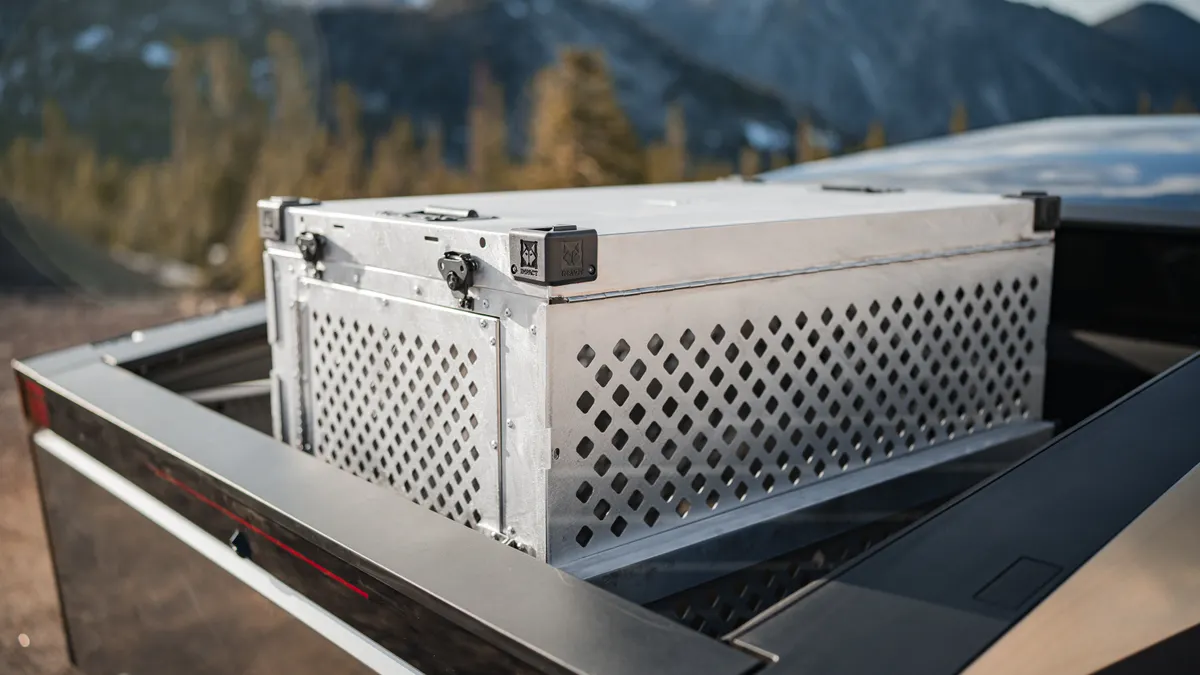
Leave the ventilation panels clear. On plastic crates, do not run a strap across large side vents if it blocks most of the opening. On wire crates, avoid draping tarps over the entire crate unless you have another way to keep airflow open on multiple sides. A full cover can trap heat. If weather protection is needed, use a partial shield that blocks direct spray but still leaves openings on at least two sides.
A pickup bed also changes the noise and vibration the crate experiences. Rubber underlayment matters more here than in an SUV, because the bed floor can be slippery and hard. A bed mat or dense rubber liner helps absorb the first jolt when the truck starts, stops, or turns.
Do not rely on the tailgate as a restraint. It is not a brace. If the crate shifts rearward, the tailgate can take the hit, and the latch area may take more force than it should. Keep the crate far enough forward that the tailgate is not part of the load path.
This is also the place where not every setup belongs. A pickup bed is the wrong choice for a crate if the route is long, the weather is severe, or the crate cannot be tied down without covering the vents. In those cases, the SUV cargo area is the better place for the crate.
Common mistakes that make a crate unsafe
The biggest mistake is securing the crate to soft or removable parts. A cargo organizer, seat cover, plastic trim panel, or tailgate cable is not a load anchor. If the part can flex by hand, it can fail under braking or cornering.
Another mistake is putting the crate in the vehicle but not stopping rotation. A crate can stay in place and still twist. That twist is enough to stress the door latch, shift the animal’s balance, or pull a strap loose. Use at least two restraint directions so the crate cannot yaw.
A third mistake is blocking ventilation with a blanket or over-tight tarp. People do this to keep the crate clean in a pickup bed, but the trade-off is poor airflow. If the crate is warm to the touch after sitting in the sun, the cover is too much. Shade and air matter more than a spotless exterior.
A fourth mistake is using a crate that is too small for the space. That sounds odd, but a tiny crate can move more easily because it has less base area and fewer contact points. A crate that fits the vehicle well can be easier to stabilize, even if it takes more room.
A fifth mistake is skipping a recheck after the first mile. Straps settle. Rubber compresses. Metal loops and crate frames seat into place. Stop and recheck the tension after a short drive, especially if the route includes sharp turns or rough pavement.
If the crate still moves after a proper two-strap setup, do not improvise with rope, wire, or a carabiner that is not rated for the load path. Change the placement, add friction, or choose a different vehicle position.
For broader emergency planning, the hub on pet emergency gear is the right place to start. This page covers crate restraint only; it does not replace a full travel kit.
Final check before you drive
A secure setup passes three checks before the vehicle moves: the crate does not slide, the doors open and close normally, and the straps do not rub against sharp edges. If any of those fail, reset the setup before the trip starts.
Run your hand along each strap and tug the crate in the direction it would move during a stop. In an SUV, that usually means forward; in a pickup bed, it can mean forward and toward the center line. If the crate shifts more than a slight nudge, tighten the system or change the anchor point.
Look at ventilation one last time. The animal should have open airflow on multiple sides, and nothing should block the crate door from opening if you need to access it quickly after stopping. In a pickup bed, make sure the crate is protected from direct debris without being sealed in.
A good setup is simple: a crate on a grippy base, anchored to real tie-downs, with movement controlled in more than one direction. That is the standard worth keeping. It is not fancy, and it does not need to be.
Can you put a dog crate in a pickup bed?
Yes, but only if the crate is firmly tied to the bed’s cargo anchors and still has clear airflow. A pickup bed is exposed to wind, heat, rain, and debris, so the crate needs more restraint than one inside an SUV. The tailgate should never act as the main support.
How do you keep a crate from sliding in a car?
Use friction underneath and restraint above. A rubber mat or shelf liner under the crate helps the base grip the floor, and two straps to cargo anchors or seatbelt points keep the crate from shifting. If the crate still moves, add a second strap in the opposite direction or change its placement.
Should a crate be seatbelted or tied down?
Tie it down to the vehicle’s cargo anchors when you can. Seatbelts can work in some SUVs if they lock properly and the belt path is stable, but cargo tie-downs usually make a cleaner, more secure connection. Either way, the crate should be held in more than one direction and should not rely on soft trim.
Drafted with AI; not yet reviewed by a person.